Get Factory-Direct Wholesale Pricing & Catalog - WhatsApp:8615954555812!

Remote Control Lawn Mower Maintenance: A Commercial Buyer’s Guide
For commercial buyers, machine service life is an important part of long-term value. While many ask whether remote-control lawn mowers are worth it, they often overlook the maintenance costs and benefits. For landscaping contractors, rental companies, and equipment dealers in particular, regular maintenance helps sustain mowing performance, reduce unexpected downtime, and extend the machine's service life—improving profitability. Today, we'll explore how maintenance helps extend the service life of these machines from the following perspectives:
• Daily Maintenance• Engine/Motor Maintenance• Tracks and Chassis• Mowing System• Remote Control System • Battery• Hydraulic/Transmission System Components• Replacement Parts• Maintenance Schedule• Troubleshooting
1. Why Maintenance Is Important for Commercial Remote-Control Lawn Mowers
1.1 Reduce Unexpected Downtime
You arrive at the job site with your equipment, and it has already started mowing the lawn—everything is going smoothly. Suddenly, the equipment stops working. You hurry over to check it and find that the fuel tank is still full, so it's not a fuel issue. You check each component one by one and finally pinpoint the problem: a loose motor connection cable is preventing the tracks from moving forward. Although the machine was repaired, it caused a significant delay in your work. What you planned to finish today had to be pushed back to tomorrow. In contrast, if you regularly inspect and maintain the machine, you can complete your work on schedule. Therefore, regular maintenance can reduce unexpected machine downtime.
1.2 Protect Cutting Performance
Lawn mower maintenance offers the following benefits:
• Cutting Efficiency: When the equipment runs smoothly, cutting efficiency is naturally high.• Blade Condition: Regular sharpening keeps the blades sharp, resulting in a cleaner cut.
• Belt/Drive System: Replacing worn-out belts prevents slippage in the drive system and reduces fuel consumption.
• Grass Clippings Removal: Keeping the underside of the mower clean prevents further buildup of grass clippings.
1.3 Extend Equipment Service Life
Commercial Lawn Mowers ≠ Maintenance-Free Machines
Because commercial lawn mowers are used far more intensively than residential models, proper care and maintenance are even more critical. This not only extends the equipment's service life but also ensures a longer-term return on investment. Next, we'll explain how to maintain your equipment and follow a proper maintenance schedule.
2. What Should You Check Before and After Every Mowing Job?
2.1 Check the Cutting System
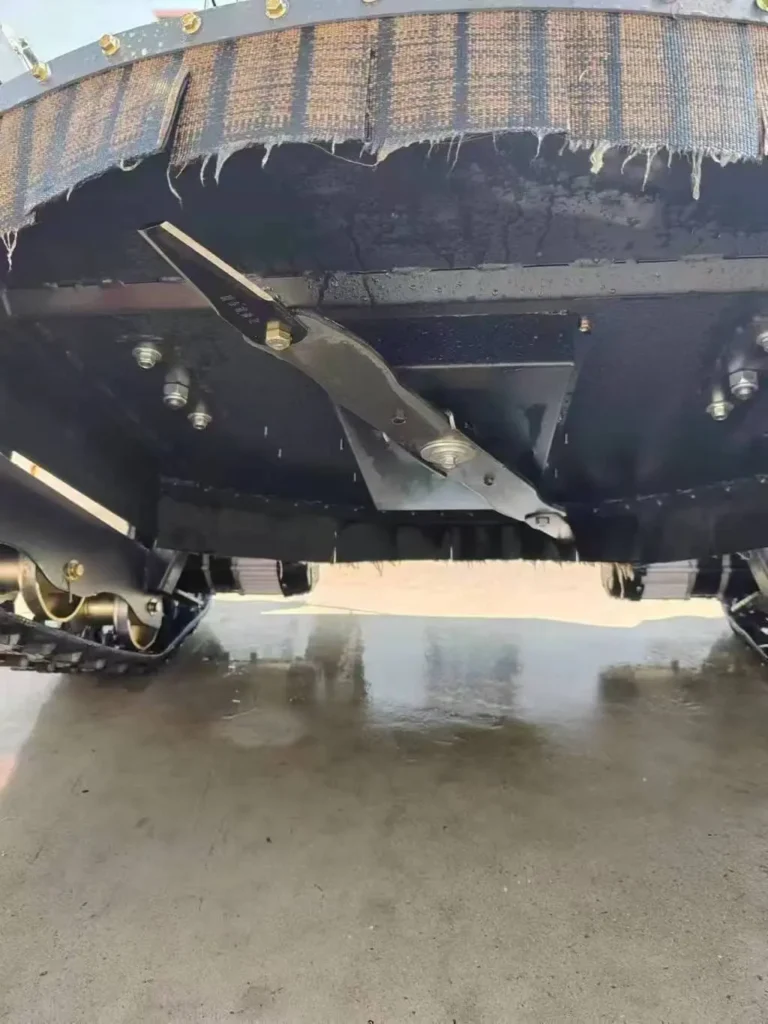
• Blades: Check whether the blades are severely worn—whether they need to be replaced or sharpened; check whether the screws securing the blades are loose to prevent the blades from flying off and causing injury.
• Debris: Remove debris to reduce engine resistance and slow down blade wear.
• Abnormal Vibration: Check for any abnormal shaking of the equipment to prevent parts from falling off.
2.2 Inspect the Tracks or Wheels
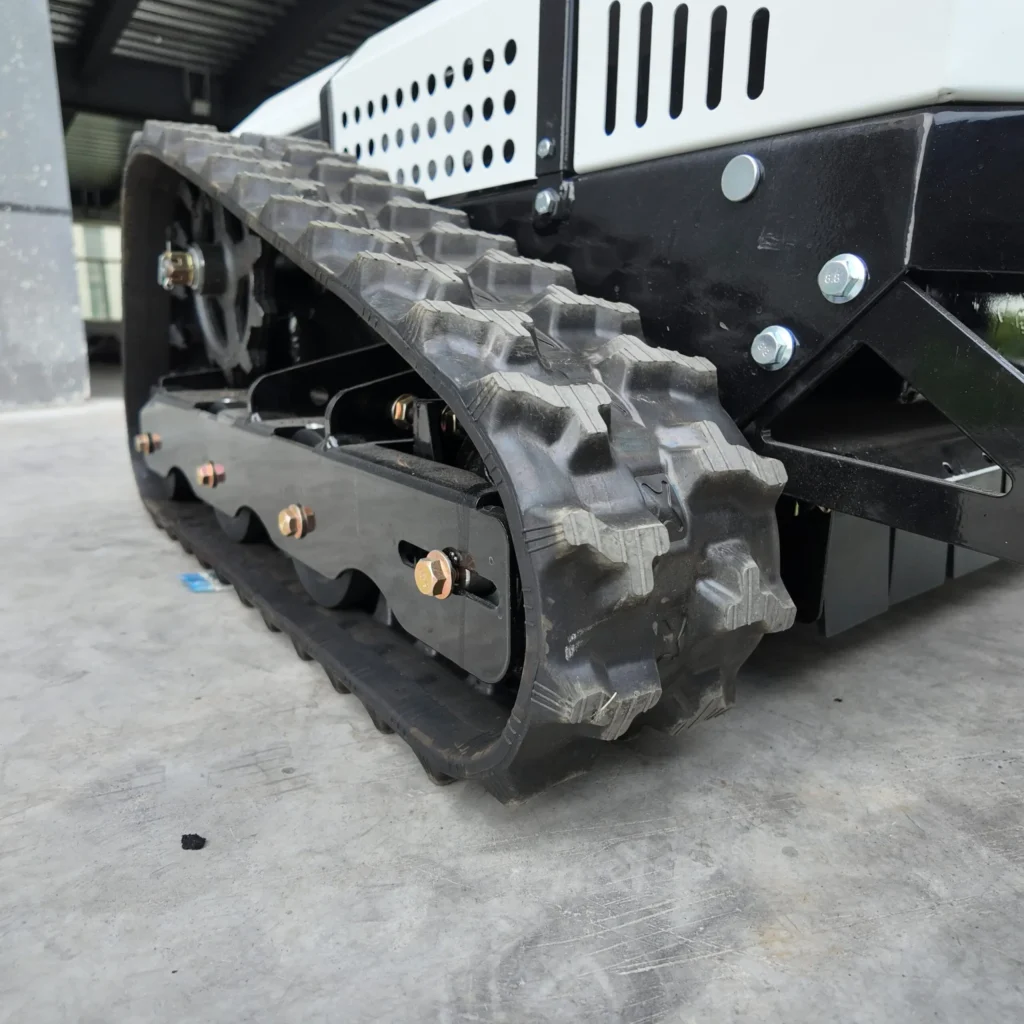
• Track Tension: Check that the tracks are not loose to prevent slippage during operation.
• Track Wear: Check for signs of wear and tear on the tracks; if they are worn, contact your dealer or supplier to have them replaced.
• Rollers: Check the lubrication of the rollers to prevent wear on the bearings.
• Foreign Objects: Remove any weeds from between the rollers to reduce friction and prevent accelerated wear.
2.3 Check the Remote Control System
• Remote Control Battery: If you have a battery-powered remote control, check the battery level and replace the batteries immediately if necessary; if you have a rechargeable remote control, make sure it is fully charged before use.
• Signal: Typically, the remote control corresponds to a signal receiver on the robotic lawn mower. If there is no response, check whether the receiver is functioning properly.
• Emergency Stop: The emergency stop is a critical feature that can be a matter of life and death in dangerous situations; please carefully verify that it functions properly.
• Control Response: Check whether the lawn mower responds to remote commands, such as moving forward, backward, left, and right, as well as adjusting the cutting height.
2.4 Inspect for Oil, Fuel or Hydraulic Leaks
Different products require different inspection procedures:
Gas-powered remote-controlled lawn mowers: First, check for engine oil and any fuel leaks.
Diesel-powered remote-controlled lawn mowers: In addition to the items listed above, check for hydraulic fluid leaks. For fully hydraulic systems, also verify that the equipment's cooling fan is operating normally.
Lithium-ion battery-powered remote-controlled lawn mowers: Check for battery damage and other issues. Charge the battery before use to avoid operating on a low battery.
3. Remote Control Lawn Mower Maintenance Schedule
Maintenance intervals vary by engine, drivetrain, and operating conditions. Follow the maintenance schedule specified for each vehicle model.
4.Gasoline /Diesel vs. Lithium Remote Control Mower Maintenance
4.1 Gasoline /Diesel Remote Control Mowers
Let's take a look at the specific maintenance items for gas-powered remote-controlled lawn mowers:
• Engine oil: This affects the level of lubrication inside the engine and fuel efficiency. Since usage varies, there is no fixed schedule; instead, check the oil based on whether it has turned black or become thick and viscous.
• Air filter: In environments with heavy dust, it is recommended to replace the air filter frequently.
• Spark plugs: For residential use, check them every 50–100 hours; for commercial use, it is best to check them approximately every 50 hours. Replace them sooner if they show signs of rapid wear. If you experience difficulty starting the engine, unstable idle, or a loss of power, replace them promptly.
• Fuel system: Check that the fuel system is unobstructed and free of leaks.
• Cooling System: Check whether the cooling fan is operating normally. If it is not working properly, first check for loose connections. The cooling system is particularly critical for fully hydraulic remote-controlled mowers, so please inspect it thoroughly.
• Belts: Check the belts for cracks, exposed strands, or other signs of wear. If any of these issues are present, replace them promptly.
Based on the above, gasoline-powered models generally require more engine-related maintenance to ensure long-term operation.
4.2 Lithium Battery Remote Control Lawn Mowers
First, let's clarify one point: Although lithium-ion batteries require relatively little maintenance, that doesn't mean they are completely maintenance-free. Their maintenance requirements are simply different—this is a more technical perspective. Here are some items we need to check:
• Battery Inspection: This primarily involves visual inspections to check for damage, deformation, or leakage. If you find any of these issues, the battery is no longer functioning properly and needs to be replaced.
• Charging: Before first use or before use, ensure the battery is fully charged, and try to avoid frequent recharging.
• Connectors: Check the connector ports for looseness; if any are found, secure them promptly.
• Heat Dissipation: Regularly cleaning the fan can effectively improve the device's heat dissipation efficiency and extend battery life.
• Storage: It is recommended to store rechargeable batteries in a dry, natural environment at temperatures between 0°C and 20°C. If you do not use a lithium-ion battery for an extended period, charge it to 50%–80% capacity and store it in a dry, cool environment. Charge the battery once every 3 months to prevent prolonged storage and self-discharge.
• Battery Status: Regularly check the lawn mower's performance. If operating time decreases significantly, the battery's lifespan may be compromised, and you should replace it promptly.
5. Tracked Remote Control Mower Maintenance
5.1 Track Tension
Determining Track Tension: Observation and Measurement
1. Visual Inspection: A normal track should hang naturally; the ideal sag is 10–30 mm (may vary slightly by model)
2. Press Test: Press down on the center of the track with your hand. If it depresses 5–10 cm and springs back quickly when you release it, the tension is appropriate.
3. Measurement Method: Use a tape measure to measure the sag on both sides of the track at points with the same link spacing to ensure consistency on both sides.
If the track is loose, adjust it promptly following these steps:
1. Loosen the track tensioning mechanism. Locate the tension adjustment bolts on both sides of the chassis (usually near the drive wheels). Use a wrench to loosen the locking nuts counterclockwise to release the track tension.
2. Adjust the track tension. Using the adjustment bolts (turn clockwise to tighten, counterclockwise to loosen), slowly apply pressure until the track sag falls within the standard range.
For specific adjustment procedures, please follow the manufacturer's recommendations.
5.2 Track and Roller Inspection
Check the track pins and the areas between the rollers, mainly to ensure they're properly lubricated. If lubrication is insufficient, apply grease to reduce friction and wear.
5.3 Remove Grass, Mud, and Debris
Manual cleaning is common, using tools such as pickaxes and hammers to remove weeds and dirt from the tracks. Specialized cleaning tools can reduce labor and extend the equipment's service life.
5.4 Working on Steep Slope
Steep slopes add extra load to the track system and drivetrain. Avoid driving over obstacles such as tree stumps and rocks to prevent the tracks from twisting; if you must drive over an obstacle, position the track's center directly over it. When crossing earth mounds, always use the work equipment to support the undercarriage to prevent the machine from swaying violently or even tipping over. Avoid idling the engine for extended periods while parked on steep slopes, as changes in the engine's tilt angle can reduce lubrication.
6.Remote Control System Maintenance
6.1 Remote Controller
• Battery: Use batteries that meet specifications to prevent voltage fluctuations from damaging the circuitry, and store them properly when not in use.
• Buttons: Regular external cleaning helps prevent dust and liquid from entering, which can accelerate component aging. Since button malfunctions are common—often caused by aging conductive rubber, oxidized contacts, or worn thin-film circuits—the solution depends on the specific design and may involve cleaning the contacts or replacing the entire button module.
• Antenna/Signal: For signal transmission modules, inspect the core oscillation circuit and the antenna connection; for microprocessor-controlled modules, verify that the clock crystal is oscillating and that the reset circuit is functioning properly.
• Physical Damage: If the device has significant external damage, immediate replacement is recommended.
6.2 Emergency Stop System
The emergency stop button is the most important safety feature on a remote control; it quickly cuts off power to the equipment in an emergency to prevent accidents. A stuck emergency stop button can seriously compromise safety and must be identified and addressed promptly.
• Dust accumulation: Prolonged use allows dust to enter the button, causing it to stick
• Oxidation and rust: Humid environments cause metal parts to oxidize and rust
• Mechanical wear: Frequent pressing causes the spring to fail or deform
• Foreign objects: Small particles become lodged in the button's crevices
• Lubrication failure: The original grease has dried out or deteriorated
• External Cleaning: Use compressed air to blow out dust and foreign objects around the button
• Disassembly and Cleaning: Disassemble the button assembly and thoroughly clean the interior
• Rust Removal: Sand down and clean areas affected by oxidation and rust with fine-grit sandpaper
• Lubrication and Maintenance: Apply an appropriate amount of silicone grease or conductive grease to moving parts
• Component Replacement: Replace the entire emergency stop button if it is severely damaged
6.3 Signal Range and Interference
Lawn mower remote controls typically operate on the 2.4 GHz frequency band, sharing channels with routers and Bluetooth devices. If you operate the mower near high-voltage power lines, substations, or large electric motors, the range can drop sharply from the normal 200–300 meters to just a few meters, or the remote control may lose signal completely.
A temporary solution is to turn off nearby electronic devices or move the lawn mower to an open area. If you frequently operate in complex electromagnetic environments, consider a remote-controlled lawn mower with an anti-interference module.
6.4 Inspect Control Response Before Operation
Get into the habit of checking the remote's responsiveness before you use it. If it doesn't respond, replace the batteries first, then check for interference; these two steps can resolve most malfunctions. If a button is damaged and the warranty has expired, contacting the manufacturer for a replacement remote is more reliable than trying to repair it yourself.
Also make it a habit to perform quarterly inspections: check the battery voltage every three months, and inspect the rubber seals for cracks before and after the rainy season. When storing the remote, avoid direct sunlight and damp environments, as extreme temperatures can accelerate aging in electronic components.
7. Common Remote Control Lawn Mower Problems and Troubleshooting
7.1 Mower Does Not Start
Check the "big three": (1) Fuel — is there fresh gas? (2) Air — is the air filter clean? (3) Spark — is the spark plug wire connected and the plug clean? Also verify the throttle is set to maximum and the remote has fresh batteries.
7.2 Mower Loses Remote Signal
The following reasons usually cause this; please troubleshoot them one by one:
1. Low battery: Check the battery level and replace the battery or recharge it promptly.
2. Signal interference or transmission issues: Temporarily turn off any nearby sources of interference.
3. Hardware wear and tear or improper operation: If the buttons are worn out, replace them promptly. If the issue is due to improper operation, try restarting the device.
7.3 Tracks Slip or Move Unevenly
This is usually related to track tension or wear.
1. Check if the track is too loose. You can adjust the track tension mechanism to resolve this; detailed instructions are provided in the track maintenance section.
2. If the track is worn out, it needs to be replaced. Contact your dealer for assistance.
7.4 Cutting Performance Drops
Decreased Cutting Performance
1. Check the sharpness of the blades and replace or sharpen them regularly based on usage time.
2. Inspect the mower deck and remove weeds to prevent clogging of the blades and the engine compartment.
7.5 Engine or Motor Overheats
If the engine or motor overheats, stop the equipment immediately, especially when working under heavy load on a slope, as this strains the engine and drive motor. Once the equipment has cooled down, check whether weeds have become entangled and caused excessive resistance. If so, clear them away before resuming operation. If the problem persists, contact the appropriate supplier for assistance.
7.6 Unusual Vibration or Noise
This usually results from imbalances in gasoline/diesel engines, electric motors, blade shafts, or other components; you can resolve the issue by troubleshooting mechanical imbalances. Contact your supplier for assistance with specific requirements.
8. Spare Parts: What Should Commercial Buyers Keep in Stock?
8.1 High-Wear Parts
For remote-controlled lawn mowers, it is recommended to keep the following list of frequently replaced parts on hand:
• Blades
• Belts
• Filters
•Tracks
• Rollers
• Bearings
This can improve after-sales service efficiency.
8.2Why the Supply of Replacement Parts Is Critical for B2B Buyers
Spare Parts for Remote-Controlled Mowers are an important part of the commercial mower supplier market, helping providers deliver better customer service and create more opportunities.
9. How to Reduce Remote Control Mower Maintenance Costs
We need to understand not only the cost of remote-controlled lawn mowers, but also their maintenance costs. Let's explore ways to reduce overall maintenance costs.
9.1 Choose the Right Mower for the Terrain
How to choose the right remote control lawn mower? Base this decision on your typical working conditions. If the lawn mower doesn't meet your needs, it may wear out faster and cause more downtime. So the first step is to choose the right type of lawn mower.
9.2 Follow a Preventive Maintenance Schedule
Only by following a preventive maintenance schedule can we reduce future maintenance costs. Please refer to Section 3, "Remote Control Lawn Mower Maintenance Schedule," in this article to help you develop a maintenance plan.
9.3 Keep Common Spare Parts on Hand
It is important to keep commonly used spare parts on hand, as this lets us replace parts promptly when we detect a problem with the equipment, thereby extending its service life.
9.4 Train Operators
Equipment damage can sometimes be quite severe. Two common causes are operator violations of operating procedures, which can cause equipment to run under excessive loads for extended periods, or failure to perform timely pre- and post-use maintenance, which can lead to sudden equipment failure. Therefore, training relevant personnel in operation and maintenance will help extend the equipment's overall service life.
9.5 Work With a Manufacturer That Provides After-Sales Support
Choosing the right supplier for remote-controlled lawn mowers is also crucial. Consider their overall capabilities, not just low prices. If you're looking for a supplier, please visit our "Remote Control Lawn Mower Supplier for OEM & ODM" webpage.
10. Maintenance Checklist for Commercial Buyers
11. How to Choose a Remote Control Mower Manufacturer With Good After-Sales Support
When investing in commercial remote-controlled lawn mowers, evaluate the machine's specifications and secure a reliable, long-term manufacturing partner. Equipment downtime directly causes lost revenue, project delays, and higher operating costs. When selecting a manufacturer, B2B buyers should not focus solely on the initial price; they should also assess the supplier's commitment to after-sales support.
To ensure smooth operations and maximize return on investment, here are the key criteria to consider when selecting B2B remote control mower solutions:
11.1 Spare Parts Availability
When heavy machinery operates in harsh terrain, wear and tear is inevitable. A trusted manufacturer must maintain a stock of key wear parts—such as cutting blades, tracks, drive belts, and filter elements—and offer fast shipping options.
At Trimmora, we operate a dedicated spare parts warehouse with ample inventory of critical components. With streamlined order processing and global shipping, Trimmora ensures replacement parts reach dealers and fleet operators promptly, avoiding delays and keeping your equipment running efficiently.
11.2 Technical Documentation
Comprehensive technical support starts with clear, easy-to-understand documentation. Buyers should choose manufacturers that provide detailed user manuals, step-by-step troubleshooting guides, exploded parts views, and electrical schematics written in clear English.
Trimmora provides complete digital and printed technical documentation for every model. From routine maintenance procedures to troubleshooting guides, our intuitive, easy-to-understand manuals help local technicians resolve issues quickly without guessing.
11.3 OEM / ODM Support
Different markets and industries have their own unique operational requirements—whether it's specific brand identities, localized safety certifications, or customized chassis modifications. Partnering with a flexible manufacturer that offers OEM (Original Equipment Manufacturer) and ODM (Original Design Manufacturer) customization services can provide dealers with a significant competitive advantage.
Trimmora offers tailor-made OEM/ODM solutions and works closely with global distributors to adjust machine configurations and customize color schemes, branding, and accessories to meet specific market needs.
11.4 Warranty and After-Sales Service
A comprehensive warranty policy reflects a manufacturer's confidence in the quality of its engineering and manufacturing. When evaluating suppliers, check whether the warranty terms are transparent, the claims process is clear, and technical support is responsive.
Trimmora offers a comprehensive manufacturer's warranty for its robotic lawn mowers, covering key structural and mechanical components. Our professional technical support team provides online assistance, video diagnostics, and prompt responses to help partners resolve operational challenges efficiently.
11.5 Long-Term Parts Supply
Commercial remote-controlled lawn mowers are long-term assets designed for years of heavy-duty use. A common risk when choosing a remote-controlled lawn mower supplier is not getting ongoing parts support once a product is discontinued, which can lead to premature scrapping of the equipment.
Purchasers should select manufacturers that can guarantee the long-term availability of replacement parts. Trimmora is committed to maintaining the product lifecycle and guarantees parts availability for many years—even after a model has been replaced—protecting your long-term investment in your fleet.
12. FAQ
12.1 How often should a remote control lawn mower be serviced?
Perform routine maintenance on a structured schedule based on operating hours. Before each use, do a quick pre-operation check (inspect the blades, fuel/battery, and remote control connection). Basic maintenance, such as cleaning the mower deck, checking track tension, and inspecting the air filter, is recommended every 25-50 operating hours. Perform a comprehensive maintenance service, including an engine oil change and electrical system diagnostics, every 100 hours or once a year.
12.2 Are remote control lawn mowers difficult to maintain?
No, robotic lawn mowers are designed for modular maintenance and ease of operation. Modern commercial models feature easy-to-access engine compartments and quick-release components that simplify routine inspections. Although these devices combine mechanical components with electronic receivers and controllers, any qualified technician can easily perform routine maintenance as long as they follow the manufacturer's maintenance schedule and user manual.
12.3 Do tracked remote control mowers require more maintenance?
Compared to wheeled models, tracked models require special attention to the undercarriage, but their maintenance is quite simple. The main tasks include regularly cleaning mud and debris from the track system, checking track tension, and inspecting the rubber tracks for excessive wear. Proper tension prevents the tracks from slipping and significantly extends the service life of the drive sprockets and idler wheels.
12.4 How do you maintain a gasoline remote control mower?
Maintaining gas-powered remote-controlled lawn mowers focuses mainly on the internal combustion engine and the cutting mechanism. Key steps include regularly checking and changing the engine oil, cleaning or replacing the air filter, inspecting the spark plugs, and using fresh fuel with a stabilizer for long-term storage. Also, keeping the cutting blades sharp and free of debris helps the engine run at peak efficiency.
12.5 How do you maintain a lithium battery remote control mower?
Although lithium-ion battery-powered remote-control lawn mowers require less mechanical maintenance than engine-powered models, you still must maintain the batteries properly. Store the batteries in a temperature-controlled environment and avoid extreme heat or freezing conditions. Keep the electrical connectors clean and dry, avoid fully discharging the batteries before charging, and use only manufacturer-approved chargers to maintain long-term battery health and capacity.
12.6 What spare parts should I keep for a commercial remote mower?
To minimize operational delays during peak season, fleet operators should maintain a stock of high-wear parts. Recommended spare parts include replacement cutting blades, air filters and oil filters, drive belts, fuse sets, remote control batteries, and basic track/wheel fasteners.
12.7 How can I reduce remote control mower downtime?
The most effective way to eliminate unplanned downtime is to implement a rigorous preventive maintenance checklist. Operator training is equally critical—ensuring users understand how to operate the machinery properly on rough terrain can prevent unnecessary wear and tear. Partnering with a reliable manufacturer that provides clear technical support, fast spare-parts delivery, and easily accessible documentation further helps ensure maximum uptime.
13. Final: Maintenance Matters as Much as the Initial Purchase
For commercial operators, lawn mower maintenance is about more than just keeping the machine clean. It's about maximizing uptime, controlling operating costs, and keeping equipment highly efficient throughout the season. Investing in a high-performance remote-controlled lawn mower is only the first step; to maximize your return on investment, you'll also need a proactive maintenance strategy backed by a reliable manufacturer.
By establishing structured daily inspection checklists, using easily accessible technical documentation, and ensuring a reliable supply of replacement parts, fleet managers can significantly extend equipment service life and avoid costly unplanned downtime. In the highly competitive commercial landscaping and land management industry, proactive maintenance translates directly into greater operational efficiency and profitability.
At Trimmora, we not only manufacture rugged, durable remote-controlled mowers but also partner with businesses to provide long-term support, technical guidance, and a seamless supply of spare parts. Whether you're looking to expand your fleet, secure reliable OEM/ODM solutions, or upgrade maintenance support for your existing equipment, our team is fully committed to supporting your business growth.
For model-specific manuals, operating instructions, and troubleshooting resources, visit the Trimmora Remote Control Mower Support Center.
To learn more about the product, explore our full range of commercial remote-controlled mowers today, or contact our technical experts to improve your fleet's operational efficiency.
[…] Utility-scale solar farms are long-term assets, and their vegetation management requires continuous, multi-year operating schedules. Because of this, purchasing decisions should never be based solely on the initial machine price.Evaluating the true total cost of ownership (TCO) requires commercial buyers and contractors to look deeply into ongoing operational support, including:▪High wear parts: availability and ease of replacement of consumables such as cutting blades, track tracks, belts, etc.▪Powertrain Reliability: Routine engine or electric motor servicing requirements and component durability under dust and high ambient temperatures.▪Spare Parts Availability: Fast regional dispatch of critical replacement components to prevent extended machine downtime during peak growing seasons.▪Technical Support & Service: Access to responsive manufacturer troubleshooting, wiring diagnostics, and reliable warranty backing.Choosing a lower-priced machine with poor spare parts support often leads to costly job-site delays when a simple belt or blade cannot be sourced quickly.To build a preventative service strategy for your fleet, explore our practical handbook: Remote Control Lawn Mower Maintenance: A Commercial Buyer’s Guide). […]