Get Factory-Direct Wholesale Pricing & Catalog - WhatsApp:8615954555812!
Are Remote Control Lawn Mowers Worth It?
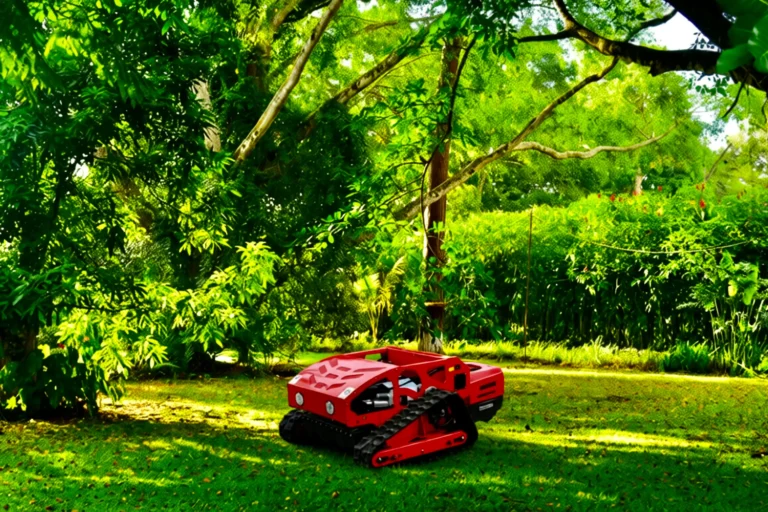
Trimmora TerraTrak 550 – Heavy-Duty Remote Crawler MowerWork Efficiency
Remote-controlled lawn mowers are rapidly gaining popularity in Australia, Europe, and North America. However, with prices often running into the thousands of dollars, many commercial landscapers, orchard owners, and equipment dealers can't help but ask: Are they really worth the investment? Or are they just expensive, overhyped toys that get stuck as soon as they encounter thick weeds? When you're running a business or managing large tracts of land, you can't afford to waste money. So, this is a perfectly reasonable question. Remote-controlled mowers can provide a strong return on investment in certain applications, particularly where slope access, operator safety, or labor costs are major concerns. Next, let's take a detailed look at the often-confusing comparisons between remote-controlled lawn mowers and traditional mowers to help you better understand their specific applications, whether they're worth the investment compared to labor costs, and whether this investment will positively impact your profits. Finally, we'll offer some purchasing advice. Let's get started.
What is a remote-controlled lawn mower?
First, let's define a remote-controlled lawn mower. It's a type of heavy-duty lawn mower with strong traction. Currently, models on the market run on gasoline, diesel, or lithium-ion electric motors and can be operated remotely with a handheld wireless remote control. Next, let's look at the differences between various types of lawn mowers, including two categories people often confuse.
Remote-Control Mowers vs. Robotic Mowers
Lawn mowers come in many types, including push mowers, self-propelled mowers, ride-on mowers, zero-turn mowers, and robotic lawn mowers. You're probably very familiar with them—you may even own one to maintain your lawn or orchard. Today, we'll focus on the differences between remote-controlled lawn mowers and robotic lawn mowers, as many buyers often confuse the two—so you can avoid making the wrong choice later on. Although both are used for mowing, their purposes are entirely different:
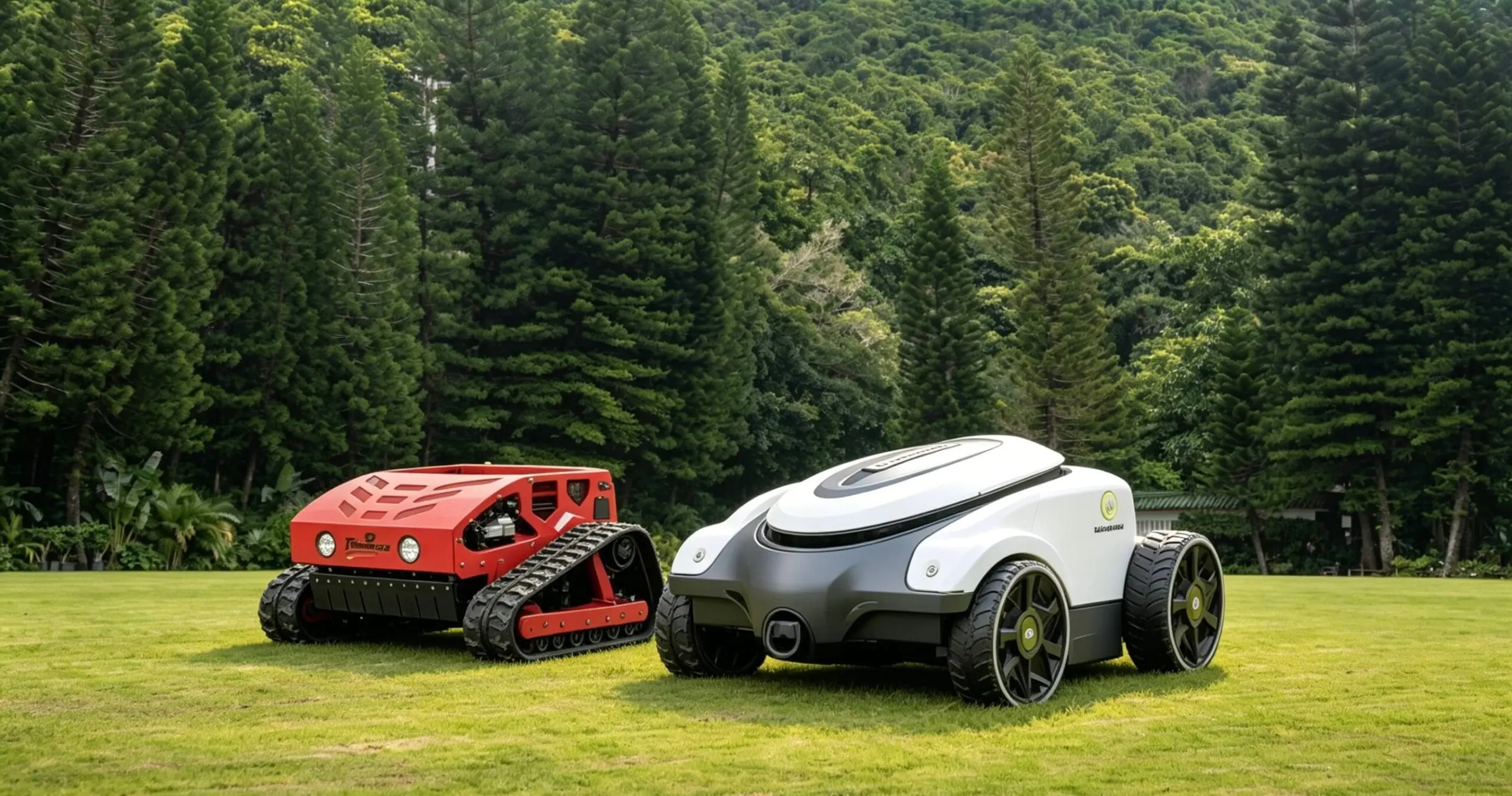
Remote-Controlled Lawn Mower: Designed to Look Like a Miniature Tank
How do remote-controlled lawn mowers work?
The main components of a remote-controlled lawn mower include:
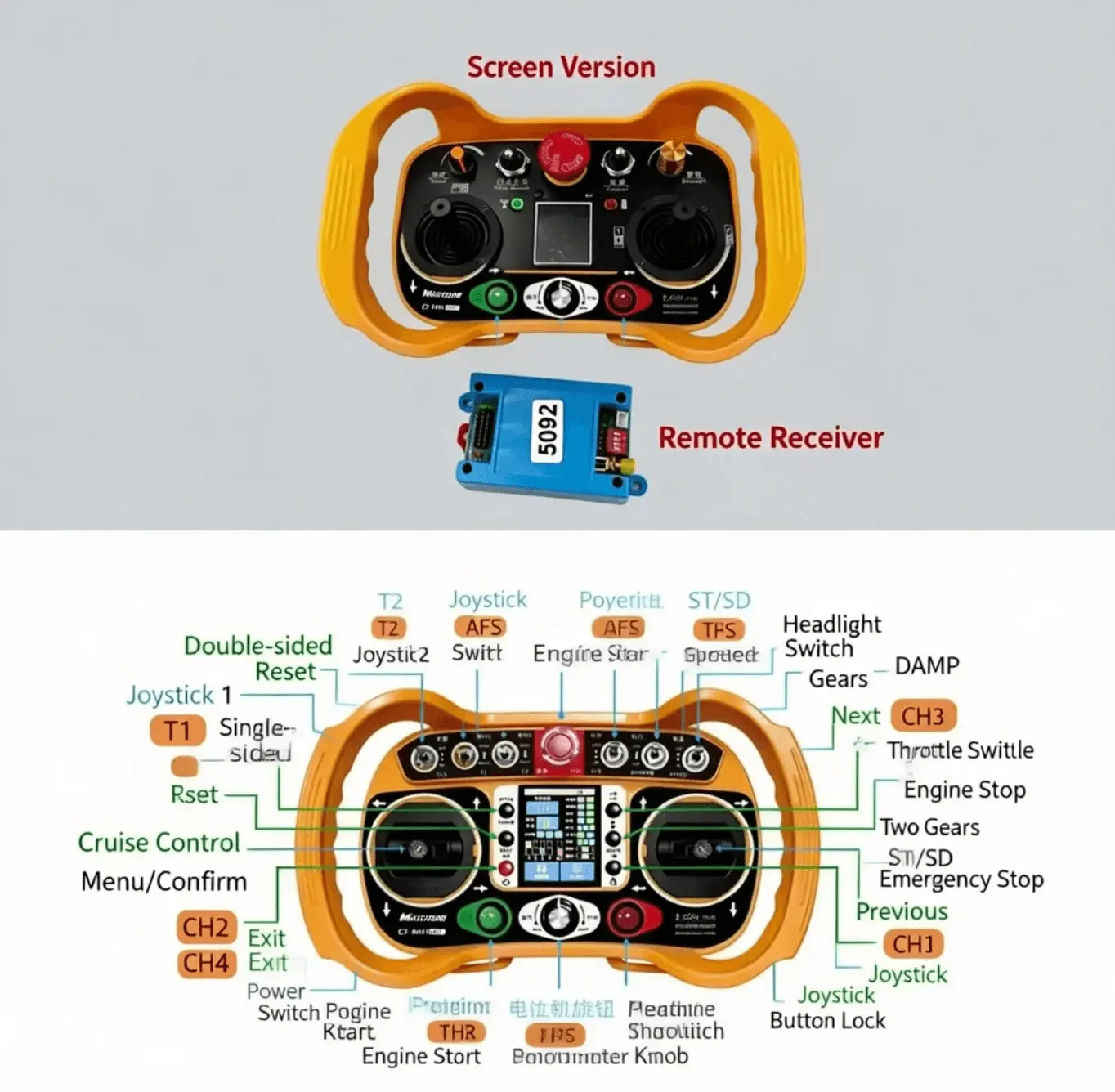
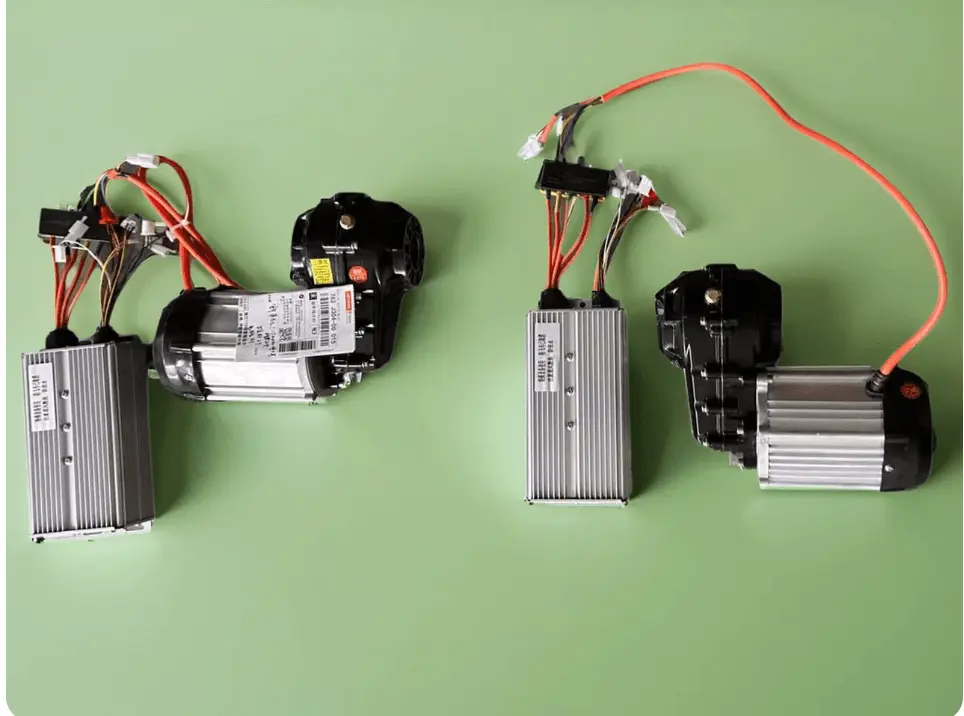
a handheld radio transmitter, a signal receiver, dual electric wheels or track motors (classified as brushed or brushless motors), and either a gasoline engine or a high-capacity battery. Users can control direction, adjust speed, set cutting height, and activate the cutting blades from a safe distance using joysticks or buttons.
Core Components:
Transmits encrypted radio frequency signals to the machine, with an effective range of up to 300 meters; some remote controls have an effective range of up to 500 meters. Control Board and Receiver: Convert signals from the remote control into control commands for the drive system and blade system.
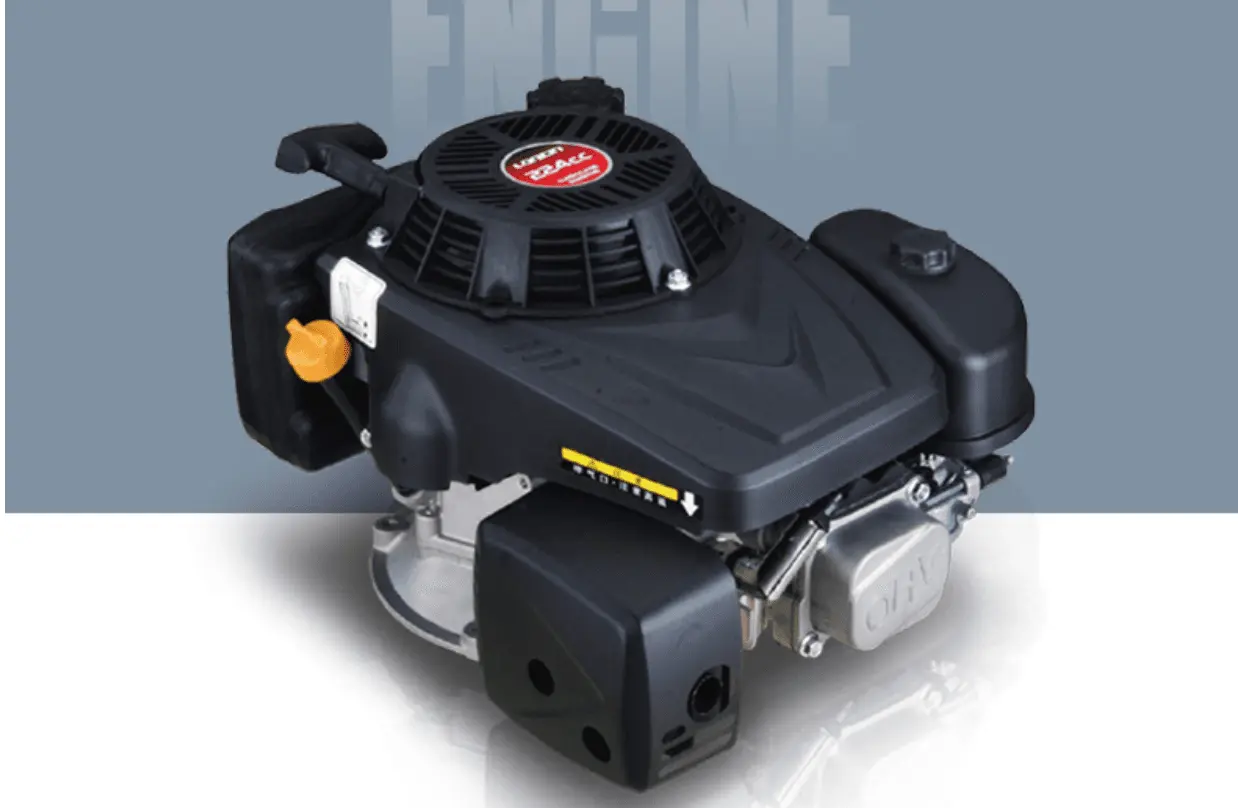
Power Source:
Utilizes a large lithium-ion battery pack or a hybrid system (combining a gasoline engine and a generator).
Drive System:
Each wheel is equipped with an independent electric hub motor (four-wheel drive), or heavy-duty rubber tracks are used to navigate steep terrain.
So, are remote-controlled lawn mowers worth buying?
Next, we’ll analyze the key challenges facing traditional lawn mowers.
The Big Labor & Safety Problem with Traditional Mowers
To understand why these machines are worth the investment, we must consider the significant challenges posed by traditional mowing methods on slopes or embankments:
1. The terrifying risk of rollovers: For traditional ride-on or zero-turn mowers, any area with a slope steeper than 15 degrees is considered a hazard zone. As a result, rollover accidents remain a leading cause of serious injuries and workplace liability in the landscaping industry.
2. Enormous Physical Strain: Pushing a heavy mower or operating a brush cutter under the scorching summer sun can be utterly exhausting. This not only increases the risk of heatstroke and long-term physical strain but also reduces mowing efficiency.
3. Challenges with Limited Access: Bulky traditional machinery cannot navigate under low-clearance solar panel arrays or through low-hanging orchard branches, nor can it enter narrow ditches. As a result, workers must clear these areas manually, which is extremely time-consuming.
Now that we understand the problems traditional lawn mowers face, can remote-controlled lawn mowers solve them?
Key Conclusion: Why Remote-Controlled Lawn Mowers Are Worth the Price (Starting with a "Calculation of Labor Replacement Costs")
Because they replace manual labor, remote-controlled lawn mowers are no longer just lawn-mowing tools; they've become essential business assets that pay for themselves quickly.
One Operator vs. A Five-Man Crew
Depending on the terrain, vegetation density, mowing method, and machine configuration, remote operation may let one trained operator complete work that would otherwise require multiple workers with handheld equipment. As a result, you can not only complete lucrative clearing jobs in a very short time but also significantly reduce your monthly labor costs.
Eliminating Insurance Liabilities
Developing New Sources of Revenue
Final Verdict: Is It Worth the Money?
Of course. A remote-controlled lawn mower is no luxury item; it is a vital safety investment and a valuable tool for saving labor. Clearing stubborn vegetation from a safe distance not only reduces workplace legal risk but also protects workers from heatstroke and significantly cuts labor hours. At the same time, it frees up more time to expand your business.
So, what do we need to know before choosing a partner? We hope this information helps.
How much does a remote-controlled lawn mower cost
The price of a commercial remote-controlled lawn mower depends on:
- engine type
- cutting width
- battery capacity
- slope capability
- customization
For the latest prices, visit our commercial remote-controlled lawn mower page or contact us for a free quote.
Factors to Consider Before Making a Purchase
To ensure that this guide is completely objective and impartial, you must consider the following factors before making a purchase:
1.Their price range
Remote-controlled lawn mowers are a high-end, industrial-grade investment. Depending on the engine displacement and drive system, prices typically range from $1,500 to over $5,000. However, while traditional push mowers have a lower initial purchase cost, their safety and operating speed cannot compare to those of remote-controlled lawn mowers.
2. They are not fully autonomous and still require human operation.
Please inform your employees or customers that when using a remote-controlled lawn mower, they must monitor its operation at all times and maintain control of the machine throughout. Although it reduces physical strain, the machine will not operate automatically once the remote control is turned off.
3.Choosing the Right Model for Your Lawn & Business Size
If your clients primarily maintain standard, flat suburban backyards, you can also choose Trimmora's Trimmora OmniRover 550 – a 4WD four-wheel-drive model that's gentle on the lawn. However, if your clients need to maintain steep slopes, commercial farms, orchards, or solar farms, a remote-controlled lawn mower is an essential productivity tool.
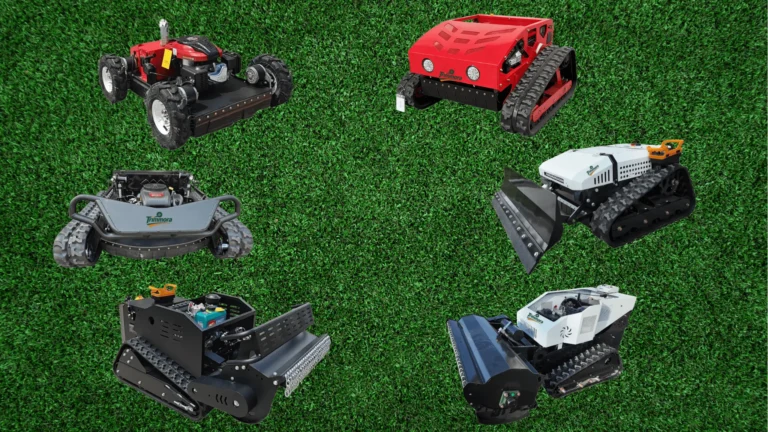
Here are the Trimmora factory-direct models you can choose from based on your clients' specific land requirements:
Suitable for residential lawns and gentle slopes (<30°): No need for a commercial remote-controlled lawn mower. Compact, agile models like the Trimmora OmniRover 550 – 4WD Commercial Remote Mower (7.5 HP gasoline engine, four-wheel drive) are affordable and lightweight (100 kg) and feature a reliable recoil starter.
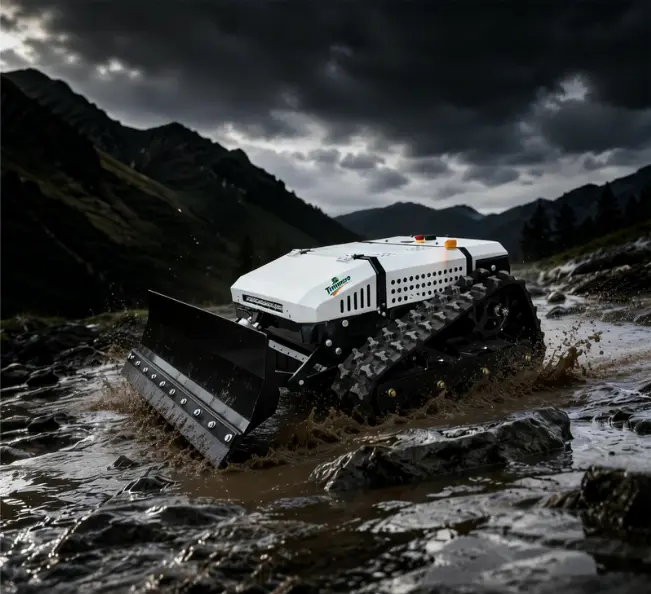
For steep slopes (>30° to 50°), Steep slopes/Orchards/Solar farms//Highway embankments/large estates: You'll definitely need a tracked mower. The Trimmora TerraTrak 550 – Heavy-Duty Remote Crawler Mower(9 HP gasoline, electric-start tracked mower) or the newly launched all-electric Trimmora EcoClean 550E – All-Electric Remote Control Mower both offer a wide range of cutting height adjustments (10–180 mm), protecting tree roots while easily gliding over low obstacles.
If the slope at your worksite exceeds 50°, we also offer the Trimmora SlopeMaster 800 Pro – Remote Control Slope Mower, which can handle slopes up to 60°. It's ideal for customers with specific slope requirements.
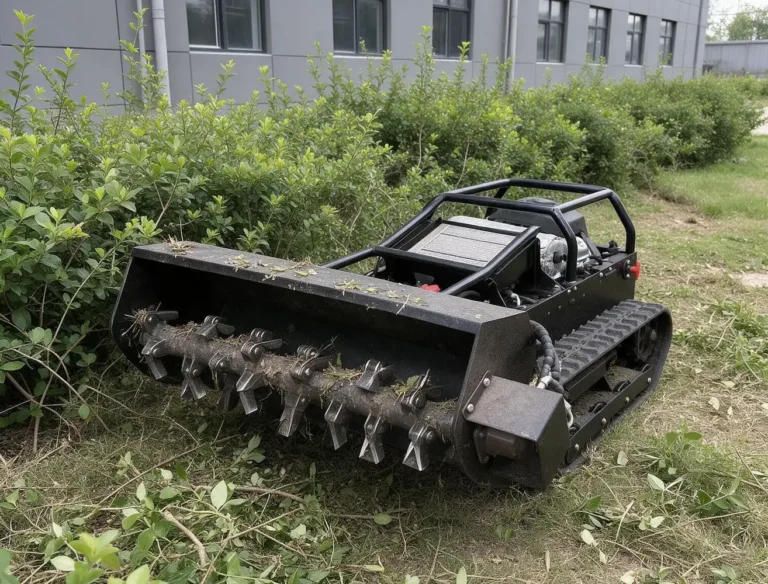
For large farms, rough grass areas, and high-efficiency commercial fields: Choose models with maximum cutting width, high torque, and high fuel efficiency. Remote control brush mower: The Trimmora Commercial Titan 800D – Remote Control Diesel Mower(18 HP diesel tracked mower) or the Trimmora TerrainCrusher 1000D – Commercial Remote Tracked Mower features a 1000 mm+ cutting deck. As a result, it can cover 2,300 m² per hour.
Explore our premium collection of heavy-duty remote-controlled wheeled and track mower for sale. Engineered for steep slopes, solar farms, large orchards, and challenging terrains.
Why Choose Trimmora Technology?
As a trusted manufacturer, Trimmora helps global buyers, distributors, and contractors maximize profits with high-quality machinery and equipment shipped directly from the factory.
1. Global Safety Standards: All Trimmora models are fully CE, EMC, and emission-certified. As a result, they easily meet strict international safety and environmental import regulations.
2. Hassle-Free Logistics: We provide full technical documentation, factory inspection reports, and bilingual customs clearance documents. Furthermore, we guarantee a reliable parts supply to minimize downtime.
3.OEM/ODM & Dealer Support: Looking to expand your own brand inventory? We offer flexible white-label solutions with low MOQs. As a result, equipment dealers can easily add their own branding to our high-margin machines.

About us
Partner with Trimmora
Are you looking for a supplier of the best remote-controlled lawn mower for the toughest conditions? Discover the Trimmora series—from versatile 30° four-wheel-drive models for manicured lawns to heavy-duty 45° diesel tracked mowers built for continuous clearing operations; we have it all. Contact our team today for a free, personalized recommendation based on your terrain!
Website: www.trimmora.com📧
Email: sales@trimmora.com💬
WhatsApp:
[…] publishing the article 《Are Remote-Controlled Lawn Mowers Worth It 》we will continue to provide more in-depth coverage of maintaining large lawns, managing […]
[…] life of a remote-control lawn mower is the most important measure of its value. While many ask whether remote-control lawn mowers are worth it, they often overlook the costs and benefits associated with maintenance. For landscaping […]
[…] Traditional mowing equipment has its limits. When terrain gets steep, vegetation becomes dense, or access is restricted around infrastructure, standard ride-on mowers and tractor attachments quickly become inefficient—and often dangerous.Remote control lawn mowers aren’t simply modern alternatives to conventional mowers. Their true value shows up when working conditions make traditional mowing unsafe, slow, or physically exhausting for operators. By separating the operator from the machine, remote-controlled platforms eliminate rollover hazards, navigate tight spaces, and handle dense brush with ease.If you are evaluating commercial equipment, this guide provides a detailed analysis of which models are suitable for different environments across seven major application scenarios, as well as the key factors commercial buyers should consider. For more specific information on return on investment, please refer to our guide on whether a remote-controlled lawn mower is a worthwhile investment. […]