Get Factory-Direct Wholesale Pricing & Catalog - WhatsApp:8615954555812!
Inside China’s Lawn Mower Industry: Southern Robotic Mowers vs. Northern Remote-Controlled Gas Mowers—Which One Fits Your Turf?
When shopping for modern lawn care equipment, buyers worldwide—from hobbyists to landscaping contractors—often feel overwhelmed by the vast array of technologies available on the market. This is especially true for commercial remote-control lawn mowers. In fact, most lawn mowing equipment today comes from the same source: Made in China.
By leveraging an incredibly mature and agile industrial supply chain, Chinese manufacturers can turn new tech into highly competitive, cost-effective machinery at breakneck speed. However, a closer look reveals a fascinating “North-South Divide” in China’s lawn mower industry. Understanding this geographic and technological split isn’t just trivia—it is the ultimate shortcut to finding the right machine for your specific terrain and budget.
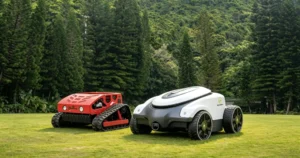
1. The Northern Powerhouses: Heavy-Duty Tech Built for the Trenches (Commercial Remote-Control Lawn Mower)
The Origin & Supply Chain Edge
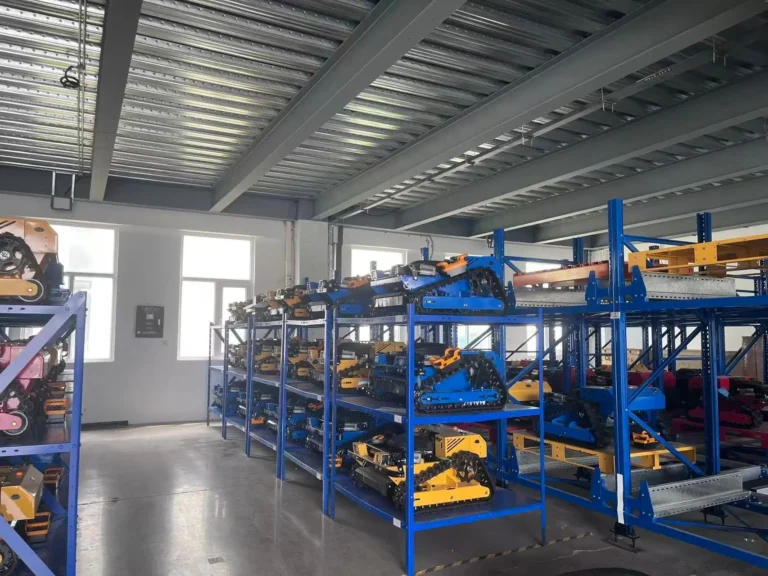
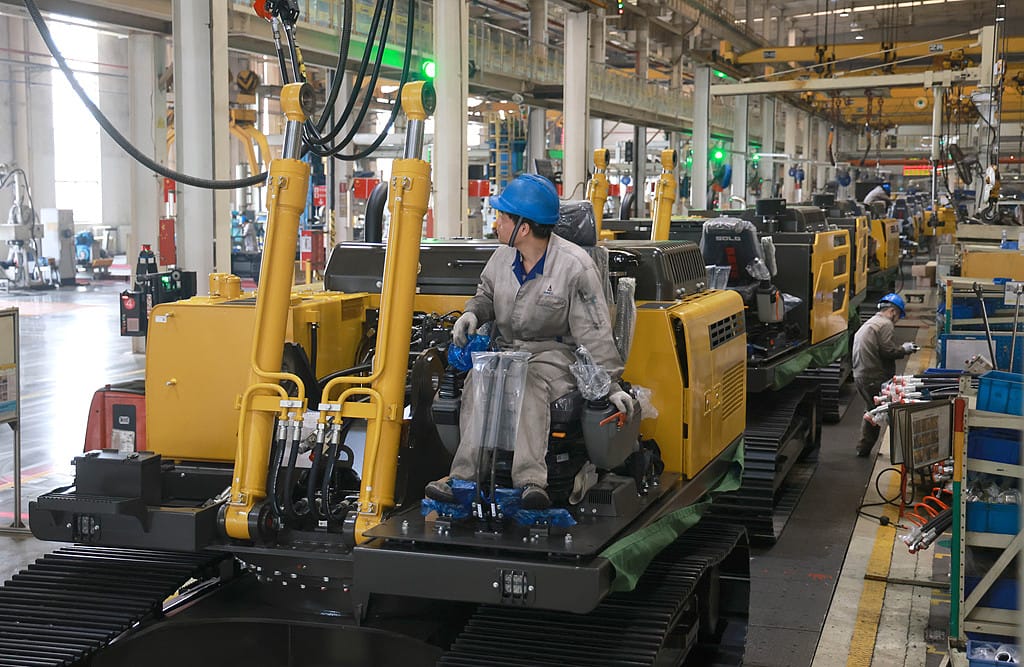
Northern China—particularly Shandong Province—is a world-renowned manufacturing hub for heavy industry and construction machinery. Most remote-control lawn mower manufacturers here didn’t start with lawn tools; they built their businesses manufacturing mini-excavators, wheel loaders, and tractors.
The pivot to lawn mowers was natural. Thanks to Shandong’s deeply entrenched mechanical supply chain, these factories easily integrated rugged hydraulic systems, heavy-duty crawler tracks, and gas engines. The result? They quickly rolled out highly durable, commercial-grade equipment (like the tracked remote-controlled mowers gaining popularity worldwide) while maintaining an unbeatable price point.
Core Product & Best Use Cases
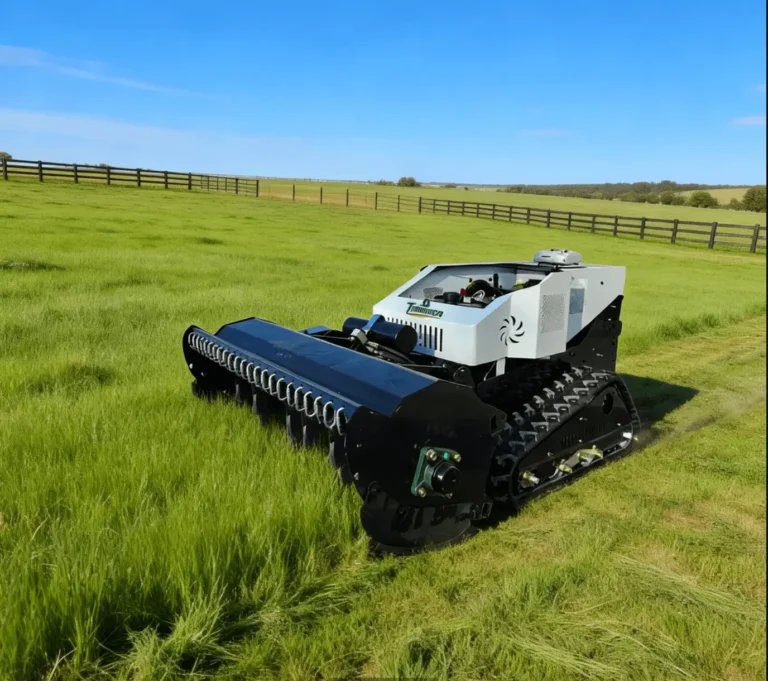
- The Tech Stack: Powerful gas engines driving the cutting decks, paired with a wireless, battery-powered remote-controlled track chassis.
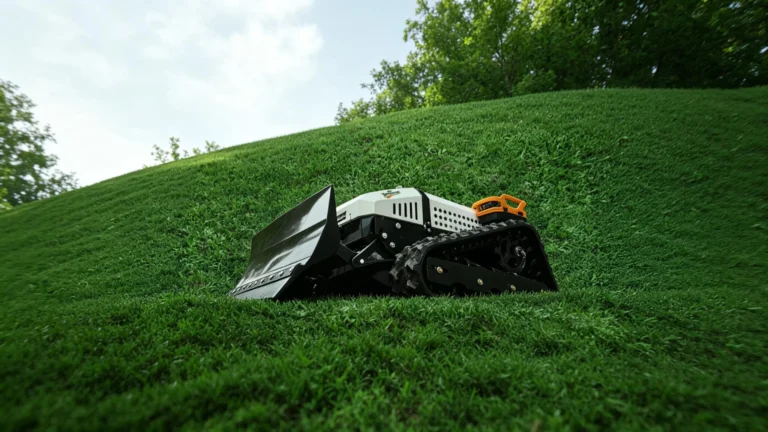
- Best Use Cases: Expansive yards, orchards, commercial farms, highway embankments, and—most importantly—treacherous, steep slopes where manual mowing is nearly impossible.
Real-World Problem Solving (Pros & Cons)
- What it fixes for you:
- Conquers Dangerous Slopes Safely: Mowing steep inclines is notoriously dangerous; traditional ride-on mowers often tip over. Tracked remote mowers feature an ultra-low center of gravity. Operators can stand safely hundreds of feet away with a wireless controller, completely eliminating the risk of rollover injuries.
- Zero Range Anxiety: Running on gasoline means you can refuel in seconds and keep tackling thick brush or dense overgrowth all day long.
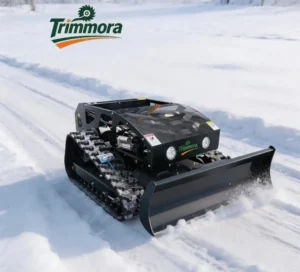
- Maximum ROI (All-Season Utility): Because these machines boast rigid steel frames and high-horsepower engines, northern factories engineered them for versatility. In the winter, you can attach a snow plow accessory to clear driveways. You get a mower in the summer and a remote snow remover in the winter, doubling your asset utilization.
- What it fixes for you:
- The Caveats: These machines are heavy, bulky, and still require someone to actively operate the joystick—meaning they are semi-automatic, not fully hands-off.
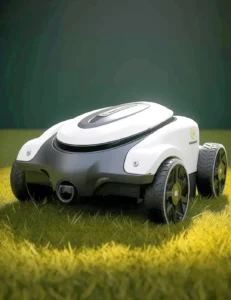
2. The Southern Innovators: Consumer Tech Turned Smart Gardeners (Fully Automated Robotic Li-ion Mowers)
The Origin & Supply Chain Edge
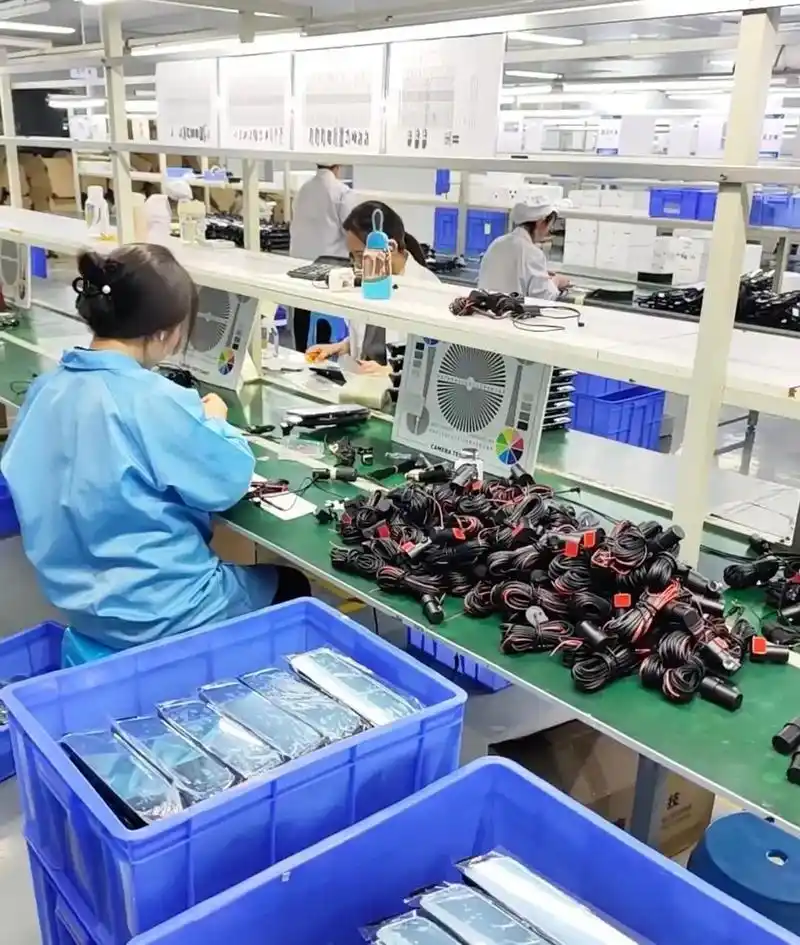
In stark contrast to the North’s heavy-machinery focus, Southern China (mainly Jiangsu, Zhejiang, and Guangdong) thrives on consumer electronics, smart home appliances, and micro-hardware. This region holds the world’s most advanced supply chains for lithium-ion batteries, Battery Management Systems (BMS), and autonomous software algorithms—giving southern mower brands an unfair advantage in tech innovation.
Core Product & Best Use Cases
- The Tech Stack: 100% battery-powered electric drivetrains integrated with RTK (Real-Time Kinematic) GPS positioning, LiDAR, or computer vision navigation.
- Best Use Cases: The standard, neatly manicured, and fenced-in residential lawns typically found in suburban neighborhoods across North America and Europe.
Real-World Problem Solving (Pros & Cons)
- What it fixes for you:
- True “Set-It-and-Forget-It” Convenience: Zero manual labor required. Just like an indoor robot vacuum, these smart mowers map your yard, calculate the most efficient path, cut the grass on a schedule, and head back to their charging docks on their own.
- Whisper-Quiet & Eco-Friendly: Running completely on electric batteries, they operate almost silently and emit zero emissions. You can run them at night without worrying about noise complaints or violating strict emission laws.
- What it fixes for you:
- Current Limitations & Areas for Improvement:
- Finicky in Complex Environments: These robots live and die by their signal strength. If your yard has heavy tree canopies, dense overhanging foliage, or high brick walls, the RTK satellite signal can drop, causing the mower to stall. The navigation algorithms still have room to grow.
- Limited Power & Scalability: Due to battery weight constraints and lightweight chassis designs, they simply don’t have the muscle to handle tall, woody weeds or rough, uneven terrains. Also, you cannot attach heavy winter accessories like snow plows.
- Current Limitations & Areas for Improvement:
3. The Verdict: No Better or Worse, Just Different Arenas
At the end of the day, Northern and Southern Chinese mowers aren’t inherently better than one another. They simply reflect the industrial DNA of their respective regions, tailored to entirely different jobs:
- Go with a Southern Automated Robotic Mower if you manage a standard, flat suburban backyard, value automation, and want a manicured lawn without lifting a finger or waking up the neighbors.
- Go with a Northern Remote-Controlled Gas Mower if you manage several acres of land, own an orchard, or have to maintain scary embankments, retention ponds, and slopes where you need raw cutting power and all-season utility.
4. The Horizon: A Two-Phase Market Shift
Looking ahead, as global emission standards tighten and automation tech matures, the global mower market is projected to evolve in two distinct chapters:
- The Near-to-Mid Term (Gas Dominance on Tough Terrain): The market will remain a two-way street. For large-scale commercial landscaping, agricultural use, and high-risk slope management, semi-automatic gas-powered remote mowers will remain king. Their structural rigidity, raw torque, and infinite runtime cannot be replaced by current battery tech.
- The Long Term (The Electric & Autonomous Takeover): As solid-state battery tech hits the mainstream (dropping battery weight while doubling capacity) and RTK-vision hybrid navigation becomes foolproof under heavy tree cover, the industry will inevitably pivot toward full electrification and automation.
Eventually, the brute mechanical strength of the North will merge with the brains and software of the South, giving rise to the next generation of heavy-duty, fully autonomous slope-crawling mowing robots.
What’s Your Take? Let’s Talk Turf!
Are you currently managing a steep hillside that gives you a headache every weekend, or are you looking to fully automate your backyard maintenance? Have you ever imported OPE (Outdoor Power Equipment) machinery from Chinese hubs like Shandong or Zhejiang?
Drop a comment below and share your thoughts!
- Which technology fits your current setup better—a commercial remote control lawn mowers or the smart autonomous lithium robots?
- Looking to purchase multiple machines or develop your own brand? Explore our supplier and OEM/ODM solutions.