Get Factory-Direct Wholesale Pricing & Catalog - WhatsApp:8615954555812!
Full Hydraulic Remote-Controlled Mowers: How They Work, Advantages & Commercial Applications
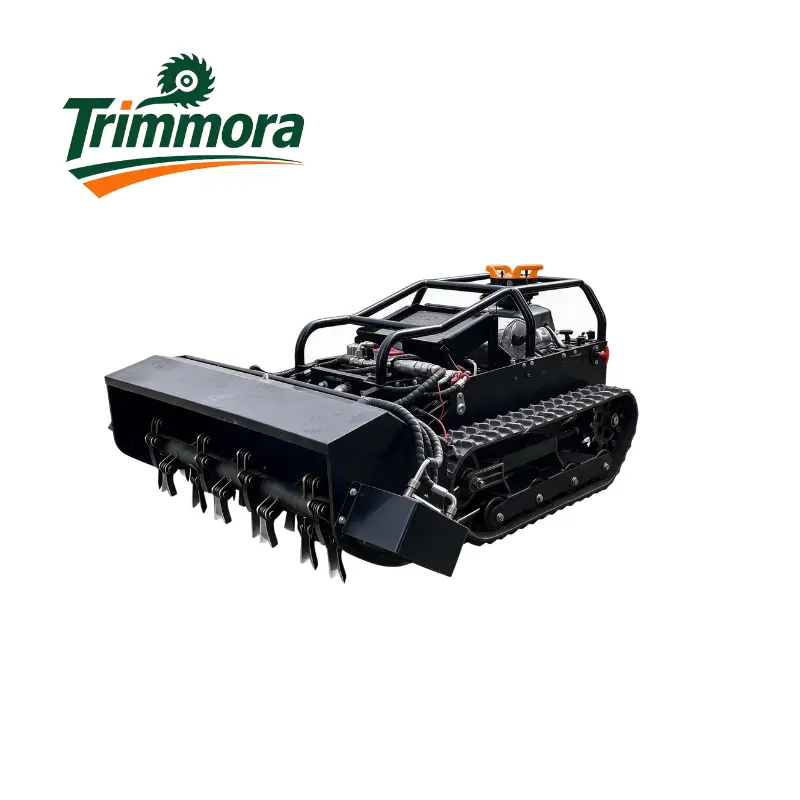
(Trimmora HydraMaster 1000)
What Is a Full Hydraulic Remote Control Mower?
A full hydraulic remote-controlled mower is a commercial vegetation-management machine that uses hydraulic power to drive key functions while letting the operator control it remotely from a safe position.
Unlike a conventional walk-behind mower, the operator does not need to remain directly behind or beside the cutting machine. Depending on the machine configuration, a remote control system can control functions such as forward and reverse travel, steering, speed, and cutting operation.
The hydraulic system is particularly important when a mower is designed for demanding commercial applications. Hydraulic power can drive the system and cutting equipment while also supporting different attachments on compatible machines.
This makes full hydraulic remote control platforms suitable for applications where operators need a combination of:
•High traction
• Controlled low-speed operation
• Remote operation
• Heavy vegetation management
• Attachment flexibility
•Wasteland reclamation and land management
•Operation on difficult terrain
•Commercial-duty performance
For contractors, landscapers, agricultural operators, municipalities, and vegetation-management companies, the hydraulic system is therefore more than just a power-transfer method. It can be an important part of the machine's overall operating system.
How Does a Full Hydraulic Remote Control Mower Work?
A full hydraulic remote control mower typically integrates several systems into one tracked unit.
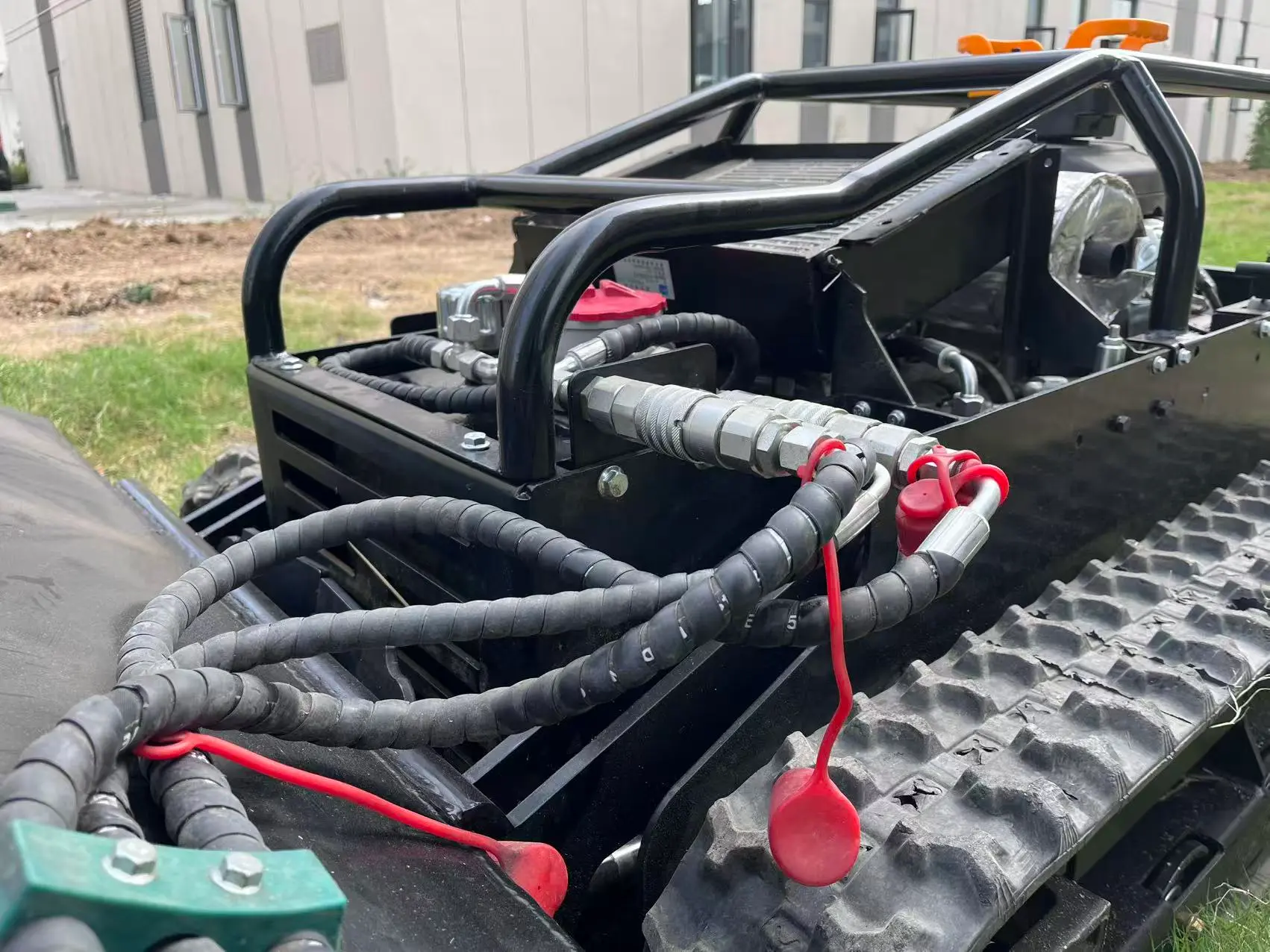
(Hydraulic system / powertrain diagram)
1. Engine and Hydraulic Power Unit
The engine provides the machine's primary power.
Instead of transferring all engine power through a conventional mechanical drivetrain, a hydraulic system uses pumps and fluid to transmit power to various hydraulic components.
The exact configuration varies by machine, but the basic concept is straightforward:
Engine → Hydraulic Pump → Hydraulic Circuit → Hydraulic Motors / Implements
This arrangement allows the hydraulic system to power different functions.
2. Hydraulic Drive System
Hydraulic motors can drive the machine's tracks.
For tracked remote-controlled mowers, independent hydraulic drive systems let the machine control the left and right sides separately.
This is useful for applications requiring precise maneuvering, particularly where the machine needs to work around:
•Slopes
•Trees
•Solar panels
•Drainage areas
•Obstacles
•Narrow working zones
•Uneven ground
The drive characteristics depend on the machine's hydraulic design, track configuration, engine output, and control system.
3. Hydraulic Cutting System
A hydraulic cutting system can transfer engine power to a mower deck, flail cutter, brush cutter, or other compatible implement.
This is particularly relevant when the machine is intended for heavier vegetation management rather than simple residential grass cutting.
Depending on the configuration, a hydraulic remote mower may be designed to handle applications involving:
•Tall grass
•Dense vegetation
•Weeds
•Brush
•Rough grass
•Vegetation around infrastructure
The cutting attachment remains an important part of the overall system. A hydraulic power unit alone does not determine cutting performance.
4. Remote Control System
The operator controls the machine from outside the immediate cutting area.
Depending on the model, the remote control may operate:
•Forward and reverse
•Left and right steering
•Travel speed
•Cutting engagement
•Engine functions
•Other machine functions
Remote operation lets the operator stay farther from the machine and its cutting equipment.
This is particularly useful when mowing areas with difficult access, uneven terrain, roadside vegetation, or other operational hazards.
Why Use a Full Hydraulic Remote Control Mower?
The main reason to consider a hydraulic system is not simply that it is "more powerful."
The more important question is:
Does the hydraulic architecture provide the control, power transmission, and attachment flexibility the application requires?
For commercial operators, several characteristics can make hydraulic systems attractive.
High Torque at Low Operating Speeds
Hydraulic motors can provide substantial torque at relatively low rotational speeds.
For a remote-controlled mower, this can be useful when the machine needs controlled movement rather than simply high travel speed.
For example, a mower on uneven terrain may need to move slowly to maintain traction and control.
Better Integration of Drive and Implements
A hydraulic system can supply power to multiple machine functions.
This creates opportunities for a platform to support different working attachments, depending on the machine's hydraulic capacity and design.
Instead of designing an entirely different machine for every application, a compatible hydraulic platform can be configured to meet different vegetation-management requirements.
Attachment Flexibility
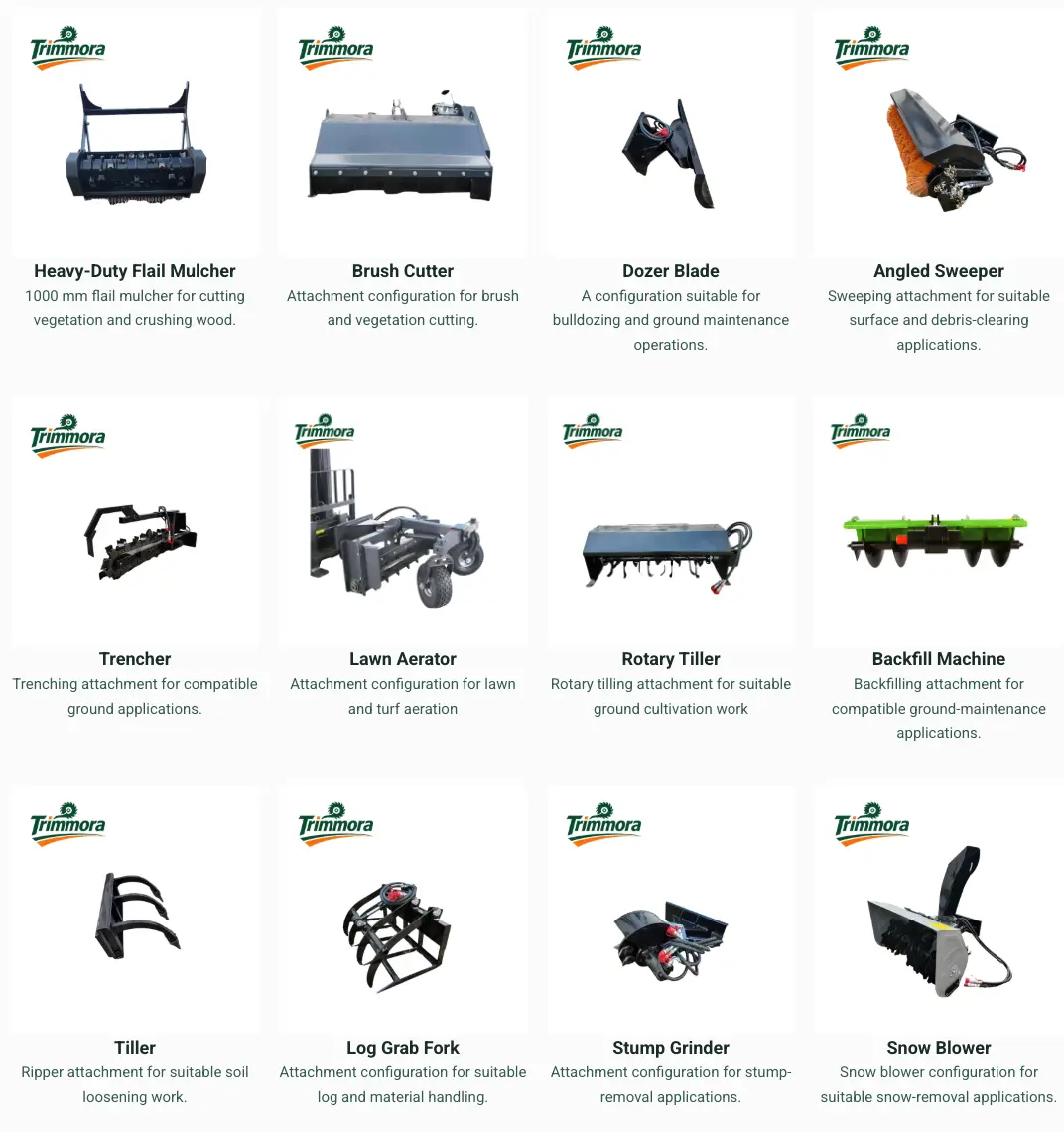
(Different commercial attachments / applications)
One of the most interesting characteristics of hydraulic remote control platforms is the potential for attachment integration.
Depending on the machine, applications may include:
•Rotary tiller
•Brush cutting
•Grass mowing
•Vegetation clearing
•Snow removal
•Other hydraulic implements
However, always confirm attachment compatibility based on the machine's hydraulic flow, pressure, mounting system, and power requirements.
Controlled Operation on Difficult Terrain
Remote control and hydraulic drive can work together to provide controlled machine movement in applications where conventional mowing equipment may be difficult to operate.
This can include:
•Sloped ground
•Rough terrain
•Roadsides
•Embankments
•Orchards
•Solar farms
•Industrial vegetation-management areas
The actual slope capability depends on the specific machine, surface conditions, attachment, operator procedure, and manufacturer specifications.
Full Hydraulic vs. Remote Control Mowers
Not every commercial remote-controlled mower needs a full hydraulic system.
The right configuration depends on the application.
The key point is that hydraulic doesn't automatically mean better for every application.
A buyer should consider the complete machine:
•Engine output
•Hydraulic pump
•Hydraulic flow
•Hydraulic pressure
•Drive motors
•Cutting attachment
•Track system
•Remote-control range
•Cooling system
•Serviceability
•Spare-parts availability
A well-matched system is more important than choosing a technology simply because it sounds more advanced.
What Are Full Hydraulic Remote Control Mowers Used For?
Fully hydraulic, remote-controlled machines are particularly useful for commercial vegetation management.
Below are several applications where this type of machine can be considered.
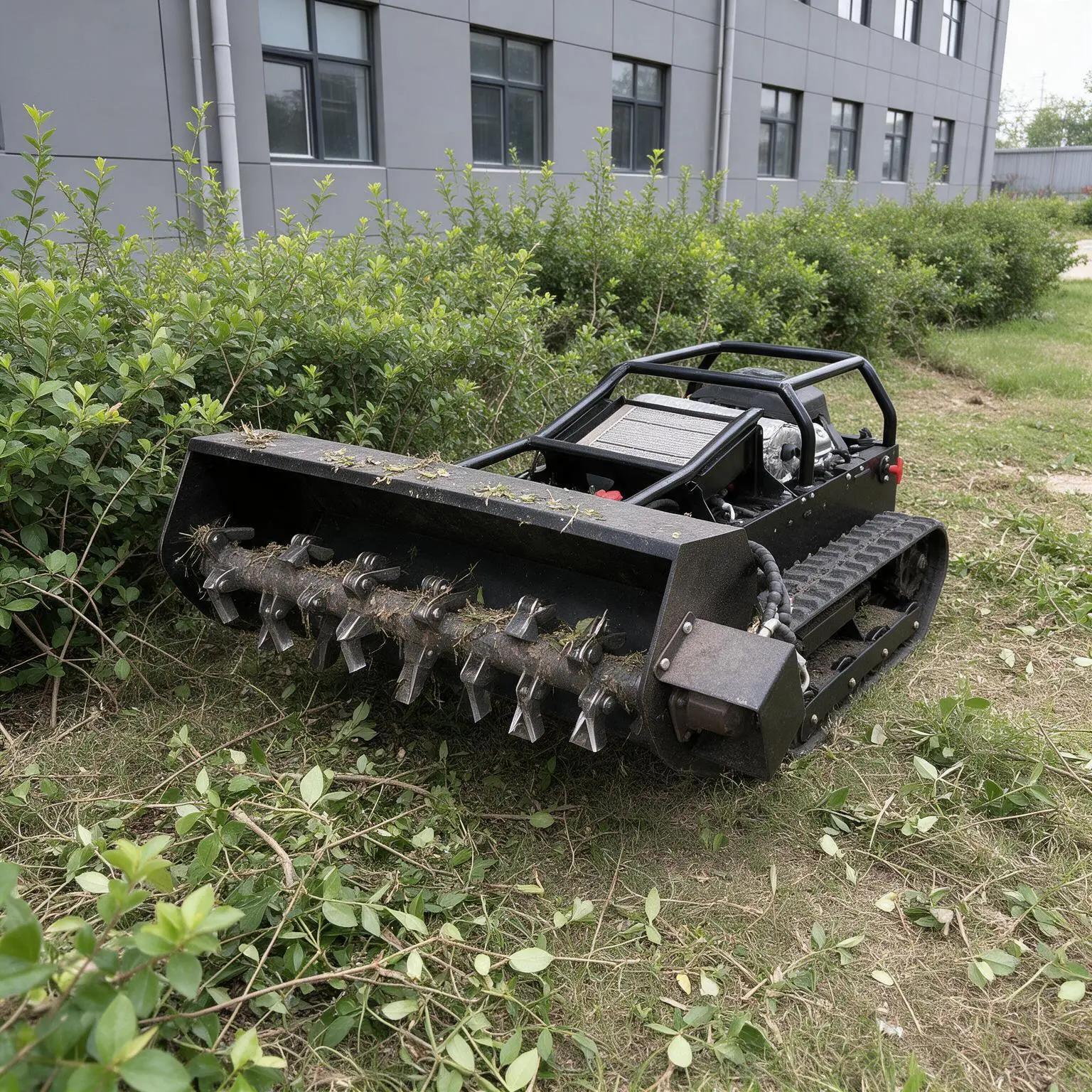
(HydraMaster is currently mowing bushes)
1. Highway and Roadside Embankments
Roadside slopes and highway embankments can be difficult to mow with conventional equipment.
A remote-controlled machine lets the operator work from a distance while maintaining control.
For contractors responsible for roadside vegetation management, important considerations include:
• Slope conditions
•Traction
•Cutting width
•Vegetation density
•Access
•Transport between work sites
For more information, see our guide to remote-controlled mowers for highway embankments.
2. Solar Farms
Vegetation management is an ongoing requirement for many solar installations.
Grass and weeds can grow around solar panels, access roads, equipment areas, and perimeter zones.
A compact remote-controlled mower can be useful where operators need to work around infrastructure without bringing large conventional mowing equipment into every area.
Important considerations include:
•Machine width and height
•Turning radius
•Ground clearance
•Cutting height
•Track configuration
•Remote visibility
•Track system
•Access between solar-panel rows
A hydraulic platform can also be useful when you need different vegetation-management attachments.
For more information, see our detailed guide to remote-controlled lawn mowers for solar farms.
3. Commercial Landscaping and Grounds Maintenance
Commercial landscaping companies may manage large areas where productivity, access, and operator control are important.
Potential applications include:
•Large estates
•Resorts
•Commercial properties
•Parks
•Sports grounds
•Industrial compounds
A remote-controlled mower lets operators work outside the immediate cutting zone while maintaining control.
For landscaping contractors, attachment flexibility can also be important because different properties may require different types of vegetation management.
4. Orchards and Agricultural Land
Agricultural land and orchards can include grass, weeds, uneven ground, and obstacles.
A compact remote mower can work between or around areas where larger agricultural machinery isn't practical.
Potential applications include:
•Orchard floor vegetation
•Grass management
•Rough agricultural areas
•Weed control
•Sloped farmland
•Areas around trees and agricultural infrastructure
For these applications, machine dimensions and maneuverability matter most.
5. Municipal and Public Land Maintenance
Municipalities and public contractors maintain many outdoor spaces.
Remote-controlled mowing equipment may be considered for:
•Public green spaces
•Roadside vegetation
•Drainage areas
•Parks
•Slopes
•Difficult-to-access land
Remote operation can be useful when terrain or vegetation makes conventional mowing less convenient.
6. Industrial and Utility Sites
Industrial sites and utility infrastructure can contain large areas of vegetation that require periodic maintenance.
Examples include:
•Utility corridors
•Power facilities
•Industrial compound
•Pipeline areas
•Drainage channels
•Infrastructure access zones
For these environments, equipment selection should consider access, terrain, vegetation type, machine dimensions, and the required cutting attachment.
A hydraulic platform can be particularly relevant when the operator needs more than a single basic mowing function.
7. Contractors and Equipment Rental Fleets
Remote-controlled mowers can also help contractors manage vegetation across multiple customer sites.
For rental companies and equipment distributors, versatility matters most.
A machine that can support different applications and compatible attachments may be more useful across a wider range of projects.
For B2B buyers, other factors should also be evaluated:
•Purchase quantity
•Spare parts
•Technical support
•Operator training
•Warranty
•Attachment availability
•OEM/ODM options
•Branding and customization
This is where choosing the right manufacturer can become as important as choosing the machine itself.
To learn more about commercial applications, please visit 7 Commercial Applications of Remote Control Lawn Mowers.
What Should You Check Before Buying a Hydraulic Remote Control Mower?
If you are evaluating a hydraulic remote-controlled mower for commercial use, don't focus only on engine horsepower.
A better evaluation starts with the complete operating system.
1. Hydraulic Flow and Pressure
Check whether the hydraulic system can provide the flow and pressure the intended attachment requires.
This is especially important for hydraulic flail mowers, brush cutters, or other high-demand implements.
2. Drive System
Understand how the hydraulic drive system is configured.
For tracked machines, check how the tracks are powered and controlled. Because some products on the market still use click-driven track movement, they work completely differently.
3. Cutting Attachment
The cutting system should match the vegetation you actually need to manage.
A mower designed mainly for grass may not suit dense brush.
4. Terrain Capability
Consider the actual working environment rather than relying only on a maximum slope specification.
Ground conditions, surface moisture, vegetation, machine configuration, attachment weight, and operator control can all affect practical performance.
5. Cooling System
Hydraulic systems and engines can generate significant heat during demanding continuous operation.
For commercial machines, the cooling system should therefore be considered as part of the complete machine design.
6. Service and Spare Parts
Commercial equipment needs to remain operational. Before purchasing, ask about:
•Hydraulic components
•Filters
•Belts where applicable
•Cutting components
•Track components
•Remote-control parts
•Spare-parts availability
•Technical support
7. Manufacturer Support
For distributors and commercial buyers, the relationship with the manufacturer can continue long after the initial purchase.
Consider whether the manufacturer provides:
•Technical documentation
•Operator training
•Spare parts
•Warranty support
•Remote technical assistance
•OEM/ODM services
•Product customization
Trimmora HydraMaster 1000: A Full Hydraulic Remote Control Mower Platform
For applications requiring remote operation, hydraulic power, and commercial vegetation management, Trimmora HydraMaster 1000 is a fully hydraulic, remote-controlled mower platform.
The concept combines a remote-controlled machine with hydraulic power for driving and working functions, creating a platform that can be configured for demanding vegetation-management applications.
Potential applications include:
•Commercial landscaping
•Highway and roadside vegetation management
•Orchards
•Solar farms
•Industrial sites
•Brush and vegetation clearing
•Other demanding commercial mowing operations
For B2B buyers, the platform approach is especially relevant when the machine must adapt to different operating environments or attachments.
See the HydraMaster 1000 full hydraulic remote control mower page to review its specifications, configuration, and available options.
Is a Full Hydraulic Remote Control Mower Right for Your Business?
A full hydraulic remote-controlled mower isn't always the right solution for every mowing application.
For simple grass cutting on relatively flat land, a normal remote-controlled mower may be sufficient.
The value of a hydraulic remote-controlled platform becomes more relevant when the job involves a combination of:
•Difficult terrain
•Dense vegetationmanagement
•Remote operation
•Commercial workloads
•High traction requirements
•Multiple working attachments
•Frequent movement between different types of work
For contractors, landscaping companies, agricultural operators, municipalities, rental companies, and equipment distributors, the decision should therefore start with the application, not simply the machine specification.
The most suitable configuration depends on the terrain, vegetation, working hours, attachment requirements, transport needs, and service expectations.
Conclusion
Full hydraulic remote-control mowers represent a different approach to commercial vegetation management.
By combining hydraulic power transmission, remote operation, and compatible cutting attachments, these machines can provide a flexible platform for demanding mowing and vegetation-management work.
The key is not simply choosing a machine with a hydraulic system. Buyers should evaluate the complete package—including hydraulic flow and pressure, drive system, cutting attachment, terrain capability, cooling, serviceability, spare parts, and manufacturer support.
For commercial users, this application-focused approach can help determine whether a full hydraulic remote-control mower is the right equipment for the job.
If you are looking for a remote-controlled lawn mower supplier to discuss a hydraulic remote mower configuration, attachment requirements, OEM/ODM options, or commercial distribution, contact Trimmora to discuss your application and requirements.
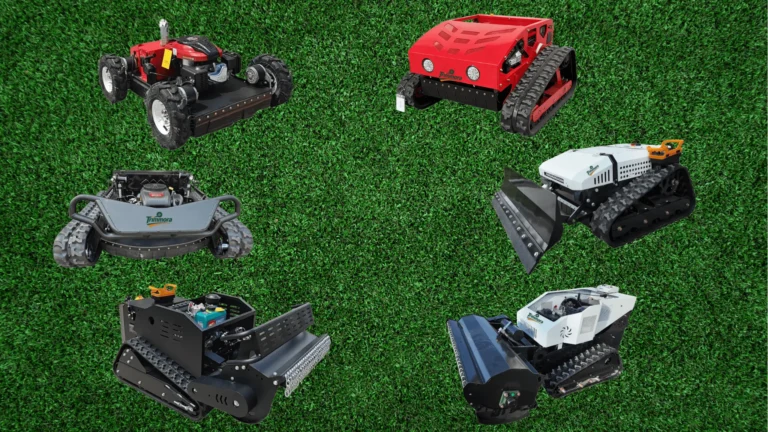
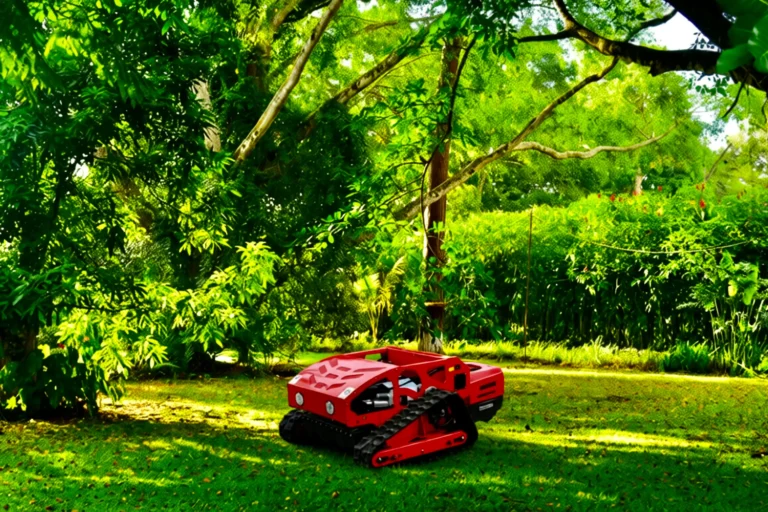
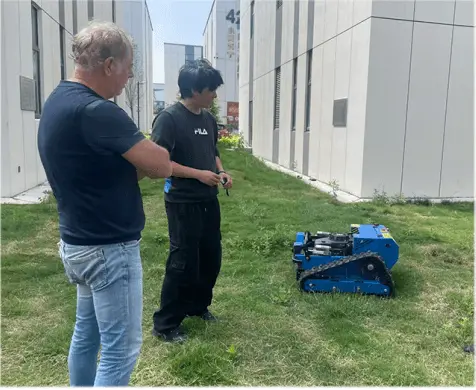
[…] Some landscaping and grounds maintenance companies do more than standard grass cutting. A contractor may need one machine platform to support different vegetation-management tasks. This is where hydraulic platforms come in. A full hydraulic remote-control mower can be designed to provide hydraulic power for drive and compatible working attachments.The Trimmora HydraMaster 1000 is built around this platform concept. Depending on the machine configuration, hydraulic platforms may support applications such as:•Flail mowing•Brush cutting•Grass mowing•Vegetation clearing•Other compatible hydraulic implementsHowever, you should never assume attachment compatibility.A buyer should check:•Hydraulic flow•Hydraulic pressure•Attachment requirements•Mounting system•Available power•Cooling capacity•Manufacturer specificationsHydraulic equipment is therefore best considered when the application actually benefits from attachment flexibility or specialized vegetation management.Related guide:[Full Hydraulic Remote Control Mower Guide] […]