Get Factory-Direct Wholesale Pricing & Catalog - WhatsApp:8615954555812!
Commercial Remote-Controlled Mowers for Landscaping & Grounds Maintenance
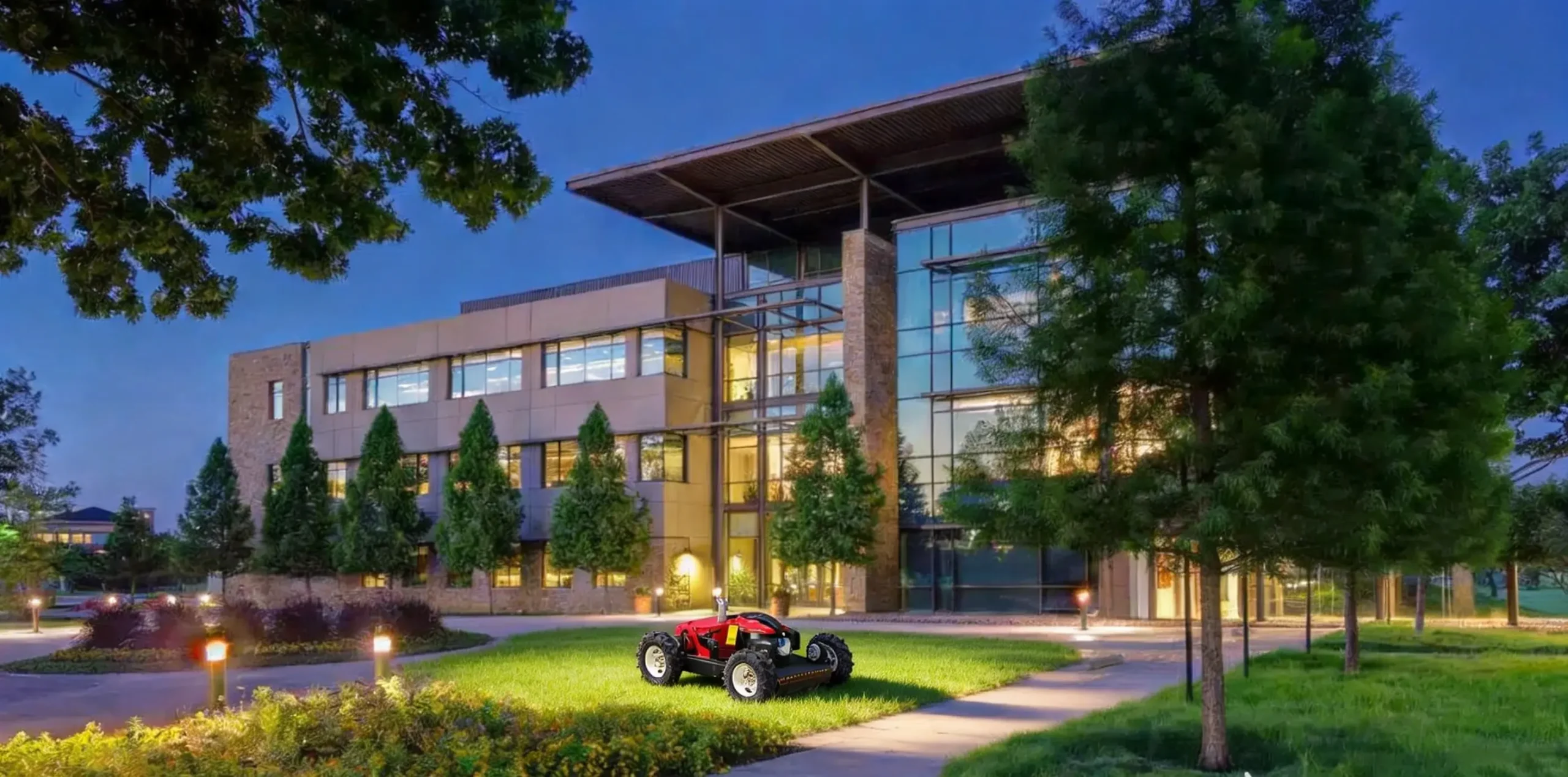
Commercial landscaping is not limited to mowing flat, regularly maintained lawns. A landscaping contractor may manage hotel grounds one day, a large commercial property the next, and a sloped or overgrown area after that.
Grounds maintenance teams can also encounter rough grass, uneven terrain, narrow access routes, embankments, trees, drainage areas, and dense vegetation.
Because of this variety, no single commercial remote control mower is ideal for every landscaping job.
The better approach is to start with the work itself.
What type of vegetation needs to be cut?
What kind of terrain is involved?
How large is the working area?
How frequently will the machine be used?
Does the operator need to work remotely?
Is a specialized cutting system required?
Once you answer these questions, it becomes much easier to determine which type of commercial remote-controlled mower makes sense.
What Is a Commercial Remote Control Mower?
A commercial remote-controlled mower is a professional mowing machine that operators can control remotely, so they don't need to ride it.
Depending on the machine, the remote control system may allow the operator to control functions such as:
•Forward and reverse travel
•Steering
•Travel speed
•Cutting engagement
•Engine or power functions
•Other machine operations
Commercial remote-controlled mowers are designed for professional applications where operating conditions, productivity, terrain, and machine durability are more demanding than typical residential mowing.
Different machines can use different power and drive configurations, including:
•Gasoline engines
•Diesel engines
•Battery-electric power
•Wheeled drive
•Tracked drive
•Motor drive systems
•Hydraulic drive systems
•Rotary or flail cutting systems
The important point is that the machine configuration should match the work.
Why Are Remote Control Mowers Useful for Commercial Landscaping?
The main benefit of remote operation isn't just convenience.
It lets the operator control the mower from a distance.
That can be useful when the machine is working on:
•Slopes
•Rough terrain
•Dense vegetation
•Large properties
•Areas with obstacles
•Difficult-to-access sections
•Hydraulic drive systems
•Areas where the operator needs a better working position
For a landscaping contractor, this can change how you approach certain jobs.
Instead of asking: "Which mower has the highest horsepower?"
a better question is: "Which mower configuration is appropriate for the work I actually perform?"
This distinction is important because a mower optimized for regular commercial grass may not be the right choice for steep slopes or heavy brush.
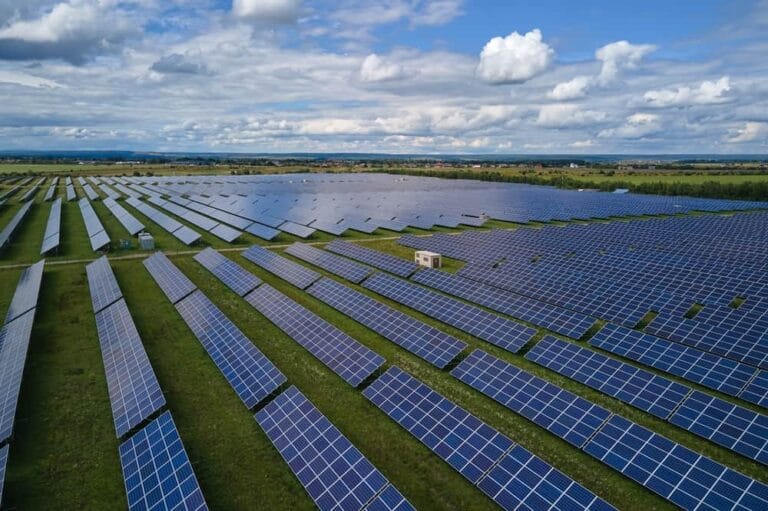
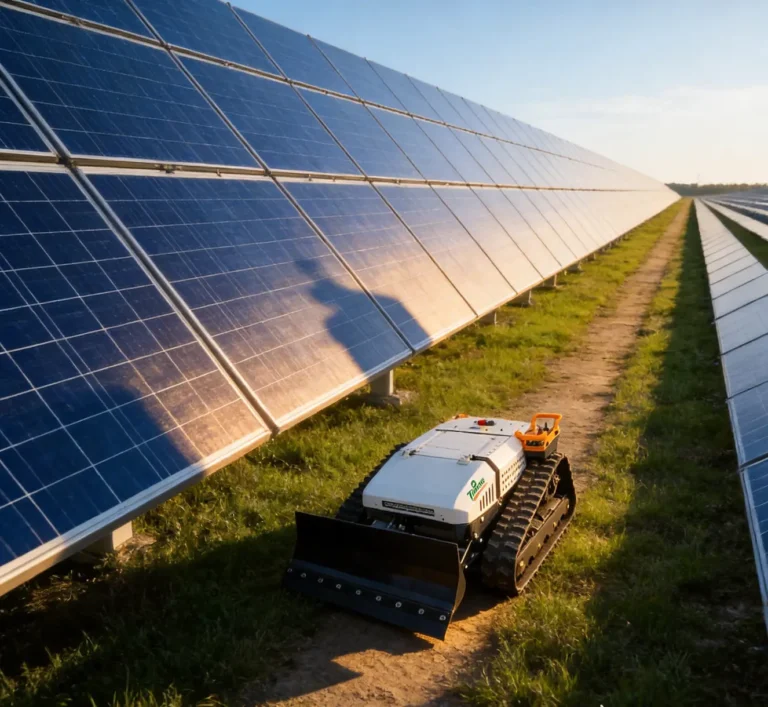
Commercial landscaping is only one of several applications for remote control mowing equipment. These machines also serve solar farms, highway embankments, orchards, municipal grounds, and other commercial sites.
Explore our [Commercial Applications of Remote Control Mowers] to see how different working environments affect machine selection.
Choosing a Commercial Remote Control Mower by Job Type
The following seven categories cover many of the conditions commercial landscaping and grounds maintenance companies encounter.
1. Regular Commercial Lawn and Grass Maintenance
The simplest application is regular grass maintenance on commercial properties.
Typical sites include:
•Hotels and resorts
•Business parks
•Private estates
•Residential developments
•Commercial properties
•Institutional grounds
•Recreational facilities
These areas generally require a mower that cuts grass efficiently while remaining easy to maneuver.
What should you look for?
For regular commercial grass, consider:
•Cutting width
•Cutting height adjustment
•Maneuverability
•Machine width
•Transport requirements
•Operating time
•Maintenance requirements
A compact remote mower can make sense for properties with landscaping features, trees, pathways, or limited access.
For these applications, an electric model such as the Trimmora EcoClean 550E may be a good fit when low-emission operation and battery-powered mowing are appropriate.
A gasoline-powered machine such as the OmniRover 550 offers another option for contractors who need a conventional fuel-powered solution.
The key point is that no single power system is universally better. The choice depends on the property's working conditions and operating requirements.
2. Large Open Grounds
Large commercial grounds present a different set of challenges.
A contractor maintaining a large open area may spend much more time covering the property than maneuvering around individual landscaping features.
In this situation, the important factors may include:
•Cutting width
•Working speed
•Fuel or battery capacity
•Machine productivity
•Transport between sites
•Serviceability
For example, a resort or large private estate may have extensive grassy areas that require regular maintenance.
A contractor should therefore balance cutting coverage with maneuverability.
A machine that is too small may take too long to complete the work.
A machine that is too large may become difficult to transport or maneuver in landscaped areas.
The right size depends on the property.
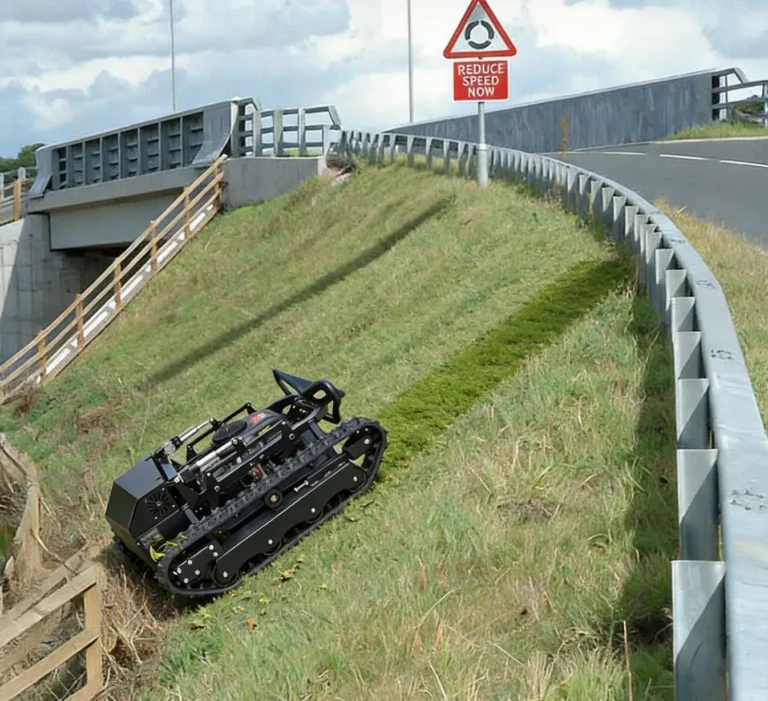
3. Slopes and Embankments
Sloped terrain significantly changes equipment requirements.
When a mower works across a slope, traction, stability, machine configuration, and operator positioning become key considerations.
A tracked remote-controlled mower can be particularly relevant for this type of application.
For example, the Trimmora SlopeMaster 800 Pro is designed for slopes and difficult terrain.
When evaluating a mower for slopes, do not look only at the manufacturer's maximum slope figure.
Also consider:
•Surface condition
•Soil moisture
•Vegetation
•Direction of travel
•Machine weight
•Track configuration
•Cutting attachment
•Operator visibility
•Actual working conditions
A maximum slope specification does not guarantee the machine will perform the same way on every real-world surface.
For contractors working on roadside or highway embankments, the application may require considerations beyond standard landscaping.
Related guide:
[Remote Control Mowers for Highway Embankments]
4. Rough and Uneven Terrain
Not all field maintenance projects take place on the lawn.
Commercial contractors may also need to maintain:
•Rough grass
•Uneven fields
•Unmaintained property
•Orchard areas
•Industrial land
•Rough access areas
•Land with stones or surface irregularities
In these conditions, the drive system becomes particularly important.
A tracked remote-controlled mower offers a different approach than a conventional wheeled mower.
The Trimmora TerraTrak 550 is a tracked, remote-controlled mower designed for applications where ground contact and terrain capability matter.
For rough terrain, evaluate:
•Track or wheel configuration
•Ground clearance
•Machine width
•Machine weight
•Cutting system
•Transport requirements
•Access to the working area
Again, the goal isn't to choose a tracked mower just because tracks sound more capable.
The goal is to determine whether the terrain actually requires that configuration.
5.Dense Grass, Brush and Heavy Vegetation
This is where commercial landscaping can move beyond normal lawn maintenance.
Some contractors need to clear:
•Tall grass
•Dense weeds
•Thick vegetation
•Rough brush
•Overgrown areas
•Vegetation along property boundaries
A machine designed for regular lawn cutting may not suit this type of work.
The cutting system becomes particularly important. For heavier vegetation management, a heavy-duty remote-controlled brush-cutting platform may be more appropriate than a conventional lawn mower.
For example, the Trimmora TerrainCrusher 1000D is positioned for heavy vegetation and brush-cutting applications.
When evaluating equipment for this type of work, consider:
•Type of vegetation
•Stem or brush thickness
•Cutting attachment
•Engine output
•Cutting width
•Cooling system
•Working speed
•Maintenance requirements
This is an important distinction for contractors:
A commercial lawn mower and a commercial vegetation-management machine aren't necessarily the same.
6. Long-Hour and Heavy Commercial Operation
Some contractors operate equipment for extended periods or under demanding working conditions.
In these applications, engine configuration, fuel capacity, cooling, serviceability, and long-term maintenance can matter more than simply choosing the smallest or lightest machine.
Consider a diesel remote control mower when the application calls for a heavy-duty powertrain and extended commercial operation.
For example, the Trimmora Titan 800D uses a diesel configuration for demanding vegetation-management applications.
When comparing machines for long working hours, look beyond horsepower.
Consider:
•Fuel capacity
•Engine type
•Cooling system
•Service intervals
•Spare parts
•Operating environment
•Transport
•Expected annual operating hours
A machine that performs well for occasional mowing may not be the best fit for a contractor running equipment every working day.
7. Specialized Vegetation Management and Multiple Attachments
Some landscaping and grounds maintenance companies do more than standard grass cutting. A contractor may need one machine platform to support different vegetation-management tasks. This is where hydraulic platforms come in. A full hydraulic remote-control mower can be designed to provide hydraulic power for drive and compatible working attachments.
The Trimmora HydraMaster 1000 is built around this platform concept.
Depending on the machine configuration, hydraulic platforms may support applications such as:
•Flail mowing
•Brush cutting
•Grass mowing
•Vegetation clearing
•Other compatible hydraulic implements
However, you should never assume attachment compatibility.
A buyer should check:
•Hydraulic flow
•Hydraulic pressure
•Attachment requirements
•Mounting system
•Available power
•Cooling capacity
•Manufacturer specifications
Hydraulic equipment is therefore best considered when the application actually benefits from attachment flexibility or specialized vegetation management.
Related guide:
[Full Hydraulic Remote Control Mower Guide]
Commercial Remote Control Mower Selection Guide
The following table provides a simple starting point for contractors.
Use this table as a starting point, not a substitute for machine specifications.
What Specifications Matter Most for Landscaping Contractors?
Engine horsepower is only one part of the decision.A better evaluation looks at the complete machine.
Cutting Width
A wider cutting width can improve productivity on large open areas.
A narrower machine may be more practical around trees, landscaping features, and restricted access areas.
Cutting System
The cutting system should match the vegetation.
Regular grass, rough grass, and heavy brush can require very different cutting configurations.
Do not select a machine based only on engine output without checking the intended cutting application.
Drive Configuration
Consider whether the machine uses:
•Wheels
•Tracks
•Independent track drive
•Other specialized drive configurations
Terrain should determine the choice
Power Source
Gasoline, diesel, and electric systems each have different operating characteristics.
Consider:
•Working hours
•Fuel or charging access
•Required power
•Transport
•Maintenance
•Noise and emissions requirements
The best choice depends on the operating environment.
Machine Dimensions
For landscaping contractors, machine size can matter as much as power.
Check:
•Width
•Length
•Weight
•Ground clearance
•Turning capability
A machine must reach the work area to be useful.
Remote Control System
A commercial remote mower should provide reliable control appropriate to the working environment.
Consider:
•Operating range
•Control response
•Visibility
•Communication reliability
•Emergency stop functions
•Operator interface
The remote-control system is part of the machine—not an accessory to evaluate separately.
Transport
Contractors frequently move machines between customer sites.
Before purchasing, check whether the machine can be transported using the company's existing:
•Trailer
•Loading equipment
•Vehicle
•Ramps
•Storage facilities
Transport can become a significant part of the total operating cost.
How Much Does a Commercial Remote Control Mower Cost to Operate?
Purchase price is only one part of the total cost. Commercial landscaping companies should also consider:
•Fuel or electricity
•Routine maintenance
•Cutting components
•Tracks or tires
•Hydraulic components where applicable
•Spare parts
•Transport
•Operator training
•Downtime
A lower purchase price does not necessarily mean lower operating cost.
For contractors, the more useful question is:
How well does the machine fit the work, and how reliably can it be kept in service?
The answer depends on annual operating hours and the type of work performed.
When Does a Remote Control Mower Make Sense for a Landscaping Contractor?
A remote control mower can be particularly useful when a contractor regularly encounters:
•Slopes
•Rough terrain
•Dense vegetation
•Large properties
•Difficult access
•Areas where operator positioning is important
•Commercial vegetation-management work
For contractors who work almost exclusively on flat, regularly maintained lawns, conventional commercial mowing equipment may remain a practical option.
Remote control technology becomes more interesting when the work environment creates challenges that conventional equipment cannot handle as easily.
How to Choose the Right Machine for Your Business
Before contacting a manufacturer, define your actual working requirements. The following checklist can help you identify the type of machine and configuration that may suit your business.
A useful rule for commercial buyers: Choose the machine based on the work it needs to perform—not simply on horsepower, price, or remote-control range.
Before requesting a quotation, a landscaping contractor should ideally be able to provide the manufacturer with:
•Typical vegetation type
•Terrain and maximum working slope
•Average working area
•Daily operating hours
•Required cutting width
•Site access limitations
•Preferred cutting system
•Transport method
•Expected annual usage
This gives the manufacturer enough information to recommend a machine configuration, rather than simply quoting the most powerful model.
Once these requirements are clear, the next step is to match the application with the appropriate mower configuration.
Trimmora Commercial Remote Control Mower Range
Trimmora develops remote-controlled mowing and vegetation-management equipment for different commercial applications.
Rather than using one machine for every type of work, the product range covers different configurations for different operating conditions.
For example:
•EcoClean 550E — electric remote mower for applications where battery-powered operation is appropriate.
•OmniRover 550 — four-wheel-drive remote mower for commercial mowing applications.
•TerraTrak 550 — tracked remote mower for rough or uneven terrain.
•SlopeMaster 800 Pro — designed for demanding slope and embankment applications.
•Titan 800D — diesel remote mower for heavy commercial operation.
•TerrainCrusher 1000D — heavy-duty tracked brush-cutting platform for dense vegetation.
•HydraMaster 1000 — full hydraulic remote mower platform for applications requiring hydraulic power and compatible attachments.
This range is not meant to suggest that every contractor needs every machine. Instead, select the right machine based on working conditions, vegetation, terrain, workload, and the required cutting system.
Frequently Asked Questions
Are remote control mowers suitable for commercial landscaping?
Yes, depending on the application. Remote-controlled mowers can be useful for commercial landscaping and grounds maintenance on slopes, rough terrain, dense vegetation, large properties, or areas with difficult access.
For flat, regularly maintained lawns, conventional commercial mowing equipment may also be suitable.
What is the best commercial remote control mower for landscaping?
No single machine suits every landscaping job.
A contractor maintaining flat commercial lawns may need a different machine from a contractor clearing steep slopes, rough terrain, or heavy brush.
The appropriate choice depends on terrain, vegetation, working area, operating hours, and cutting requirements.
Are tracked remote control mowers better for landscaping?
Tracked machines can offer advantages in applications where ground contact and traction matter.
However, a wheeled machine may suit other applications better.
Choose based on the actual terrain and operating conditions.
Can a remote control mower cut brush?
Some commercial remote-controlled mowers are designed for brush and heavy vegetation, but you shouldn't automatically use a standard lawn mower for heavy brush.
Consider the cutting attachment, power system, machine structure, and the manufacturer's specifications.
Can one remote control mower handle different landscaping jobs?
Some machines are designed as multi-purpose platforms, while others are optimized for specific applications.
A hydraulic platform may support compatible attachments, while specialized tracked or heavy-duty machines may be designed around particular types of terrain or vegetation.
Contractors should select a machine based on the majority of their actual work rather than assuming that one machine can efficiently handle every application.
Final Thoughts
For commercial landscaping and grounds maintenance, the right remote-controlled mower depends on the job, not simply the machine's horsepower or price.
A contractor maintaining hotel lawns has different equipment requirements from a contractor clearing highway embankments.
A company maintaining large estates may prioritize cutting coverage and transport, while a vegetation-management contractor may prioritize traction, cutting power, and attachment compatibility.
The most useful way to evaluate commercial remote control mowers is therefore to start with four questions:
What are you cutting?
Where are you cutting it?
How often will the machine be used?
What type of access and operator positioning does the job require?
Once you have clear answers, the right machine configuration becomes much easier to identify.
For commercial landscaping companies, grounds maintenance contractors, equipment rental businesses, and distributors, Trimmora can provide different remote-controlled mower configurations based on the intended application.
Tell us about your terrain, vegetation, working area, and operating requirements, and our team can help identify a suitable machine configuration.