Get Factory-Direct Wholesale Pricing & Catalog - WhatsApp:8615954555812!
7 Commercial Applications of Remote Control Lawn Mowers
Where remote-controlled mowers deliver the most value for landscaping, agriculture, utilities, and demanding terrain.
Traditional mowing equipment has its limits. When terrain gets steep, vegetation becomes dense, or access is restricted around infrastructure, standard ride-on mowers and tractor attachments quickly become inefficient—and often dangerous.
Remote control lawn mowers aren't simply modern alternatives to conventional mowers. Their true value shows up when working conditions make traditional mowing unsafe, slow, or physically exhausting. By separating the operator from the machine, remote-controlled platforms eliminate rollover hazards, navigate tight spaces, and handle dense brush with ease.
If you are evaluating commercial equipment, this guide provides a detailed analysis of which models suit different environments across seven major application scenarios, along with the key factors commercial buyers should consider. For more specific information on return on investment, please refer to our guide on whether a remote-controlled lawn mower is a worthwhile investment.
1. Remote Control Lawn Mower for Steep Slopes & Hillsides
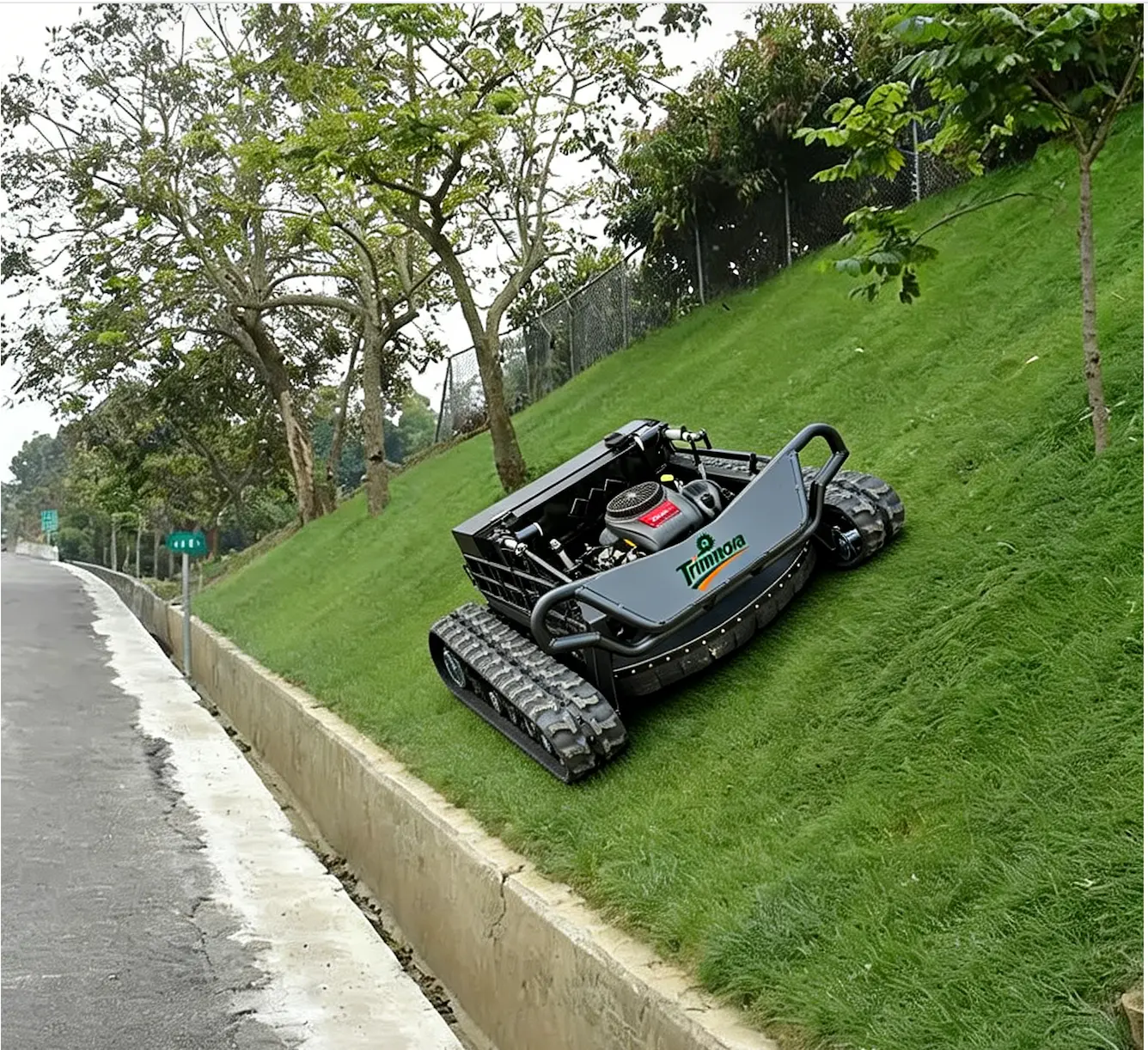
Best Suited Mower: Tracked Remote Control Slope Mower (Gasoline Engine)
Maintaining steep slopes is one of the most dangerous tasks in lawn and vegetation management. Traditional zero-turn mowers or tractor-mounted mowers face a serious risk of overturning on slopes steeper than 15° to 20°. Manual mowing on slopes is not only physically demanding and inefficient but also requires a large workforce. Let's look at the key factors for using commercial remote-control mowers on steep slopes and hills.
Key Environments:
◆Highway embankments & roadside slopes
◆Riverbanks and drainage channels
◆Mountainous terrain and steep grassland
◆Reservoir and dam slopes
Why Remote Control Matters:
◆ Operator Safety: The operator stays safely on flat ground, eliminating the machine's center-of-gravity risk.
◆ Low Center of Gravity: Dedicated slope mowers feature ultra-low profiles and wide tracks, allowing them to traverse angles up to 50° (or even 60°) without tipping.
◆Superior Traction: Rubber tracks grip loose soil, wet grass, and steep inclines far better than wheels, preventing sliding and turf damage.
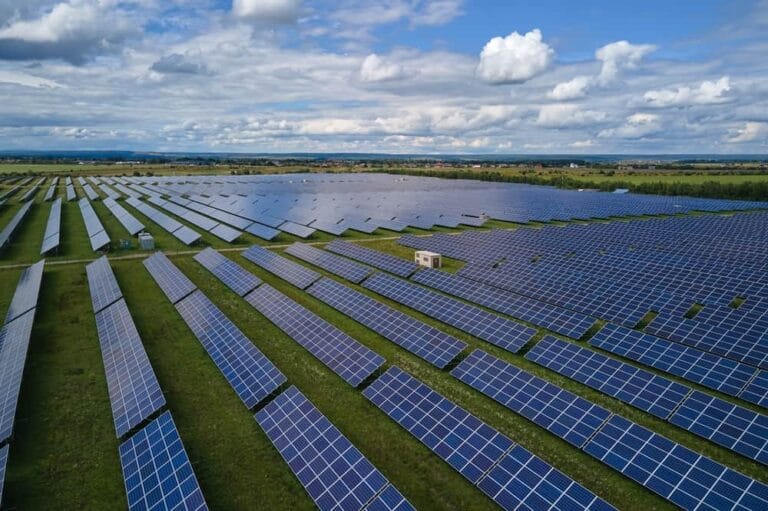
2. Remote Control Lawn Mower for Solar Farms & Utility Sites
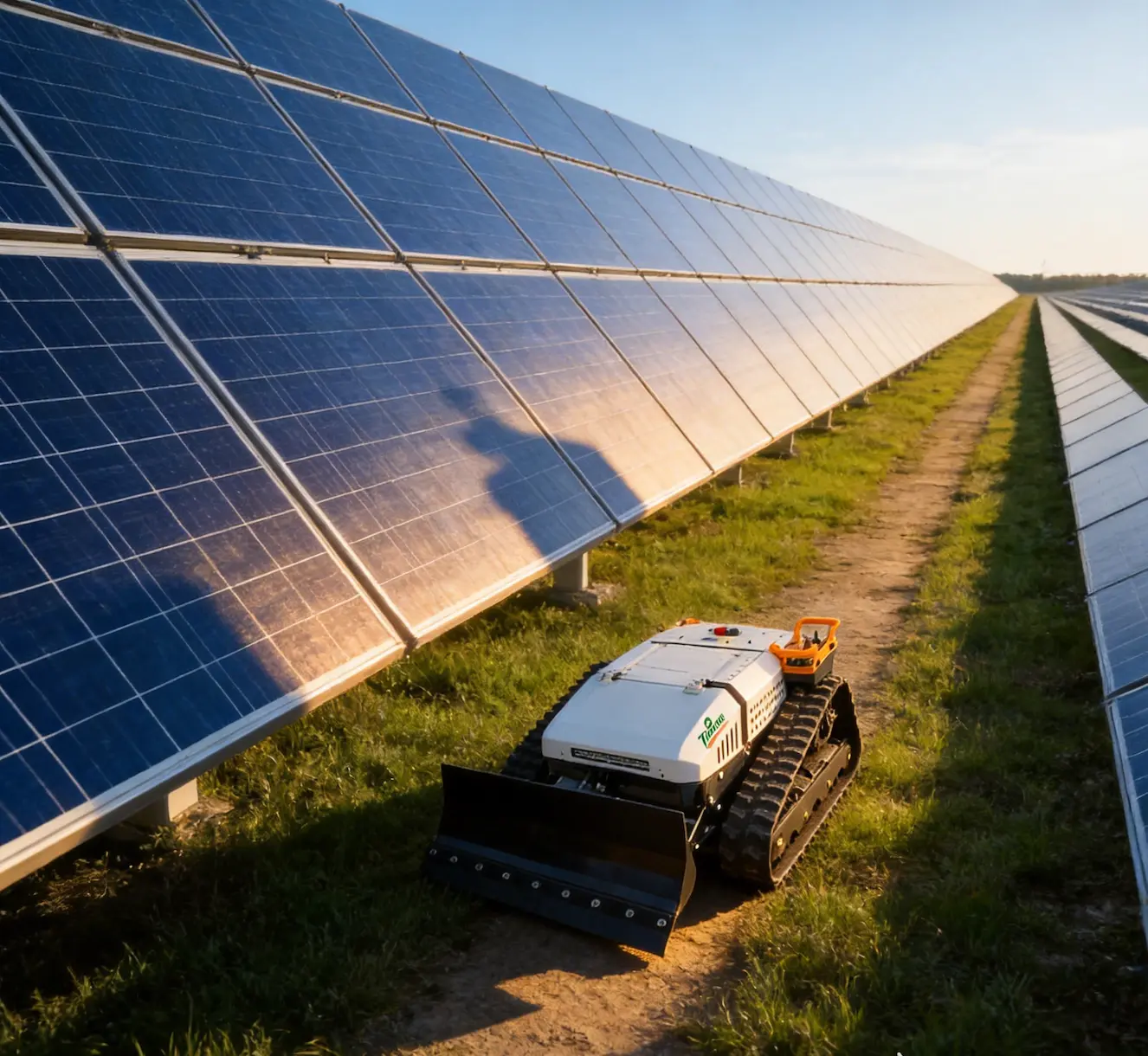
Best Suited Mower: Low-Profile Tracked Remote Control Mower (Gasoline or Hybrid)
Utility infrastructure sites present unique maintenance challenges. Solar farms, electrical substations, and pipeline corridors feature thousands of ground obstacles and narrow clearance zones where heavy machinery cannot fit, yet vegetation must be controlled to prevent shading and fire hazards.
Key Environments:
◆Solar photovoltaic (PV) panel arrays
◆Electrical substations and powerline corridors
◆Pipeline rights-of-way
◆Water treatment plants and infrastructure perimeter fences
Why Remote Control Matters:
◆Low Clearance Design: Compact, low-profile mowers easily slide underneath low-mounted solar panels without damaging expensive PV modules or racking.
◆Precision Maneuvering: Remote operation gives crews a clear line of sight around delicate wiring, posts, and ground-mounted equipment.
◆Fire Mitigation: Regular brush control reduces dry vegetation buildup, eliminating fire hazards around high-voltage equipment.
For a more detailed look at vegetation management around photovoltaic installations, see our guide to remote control lawn mowers for solar farms.
3. Remote Control Lawn Mower for Orchards & Agricultural Land
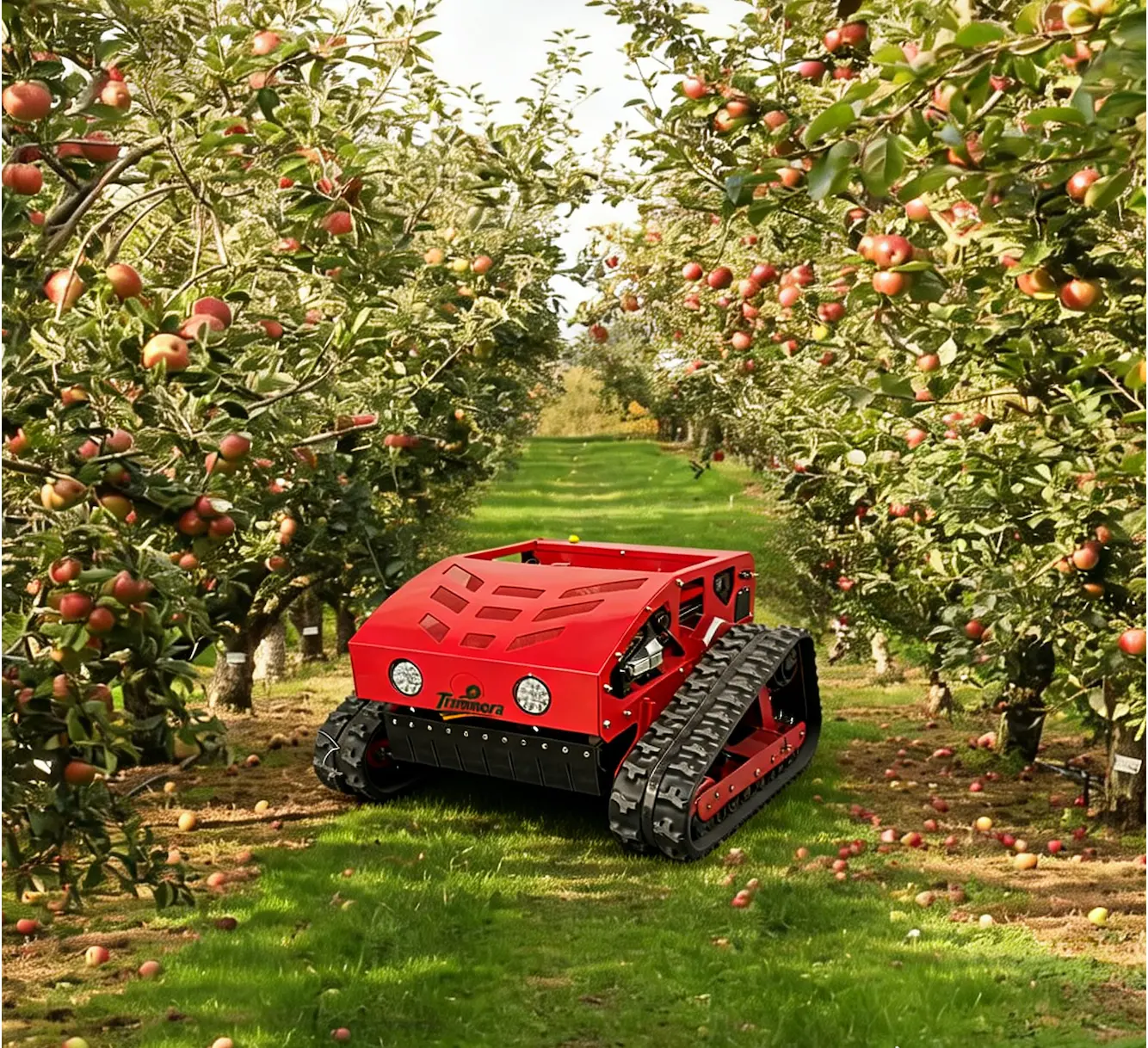
Best Suited Mower: Compact Tracked Brush Mower (Gasoline Engine)
Managing cover crops and overgrown weeds between tree rows, under low-hanging branches, or along farm boundaries requires equipment that is both nimble and powerful.
Key Environments:
◆Fruit orchards (apple, citrus, avocado)
◆Vineyards and berry plantations
◆Farm perimeter embankments
◆Overgrown, fallow agricultural fields
Why Remote Control Matters:
◆Under-Canopy Access: Operators don't have to duck under low branches or risk getting hit by debris. The machine fits under the canopy while the operator controls it from a comfortable distance.
◆Soil Protection: Tracked platforms distribute weight evenly, reducing soil compaction around delicate root systems compared to heavy agricultural tractors.
◆Heavy-Duty Mulching: Industrial-grade rotating blades shred thick weeds, suckers, and trimmings into fine mulch in a single pass.
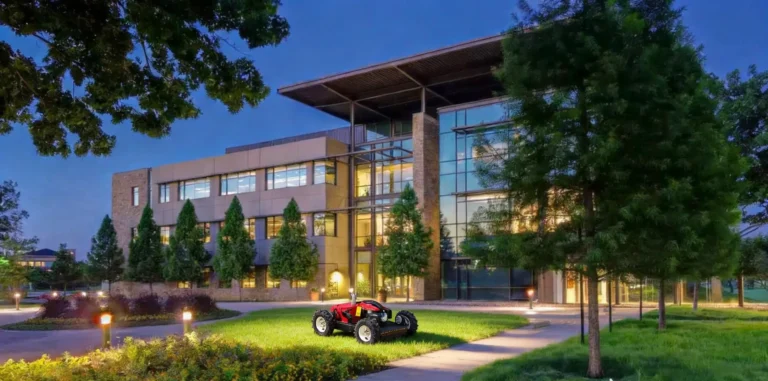
4. Commercial Landscaping & Property Maintenance
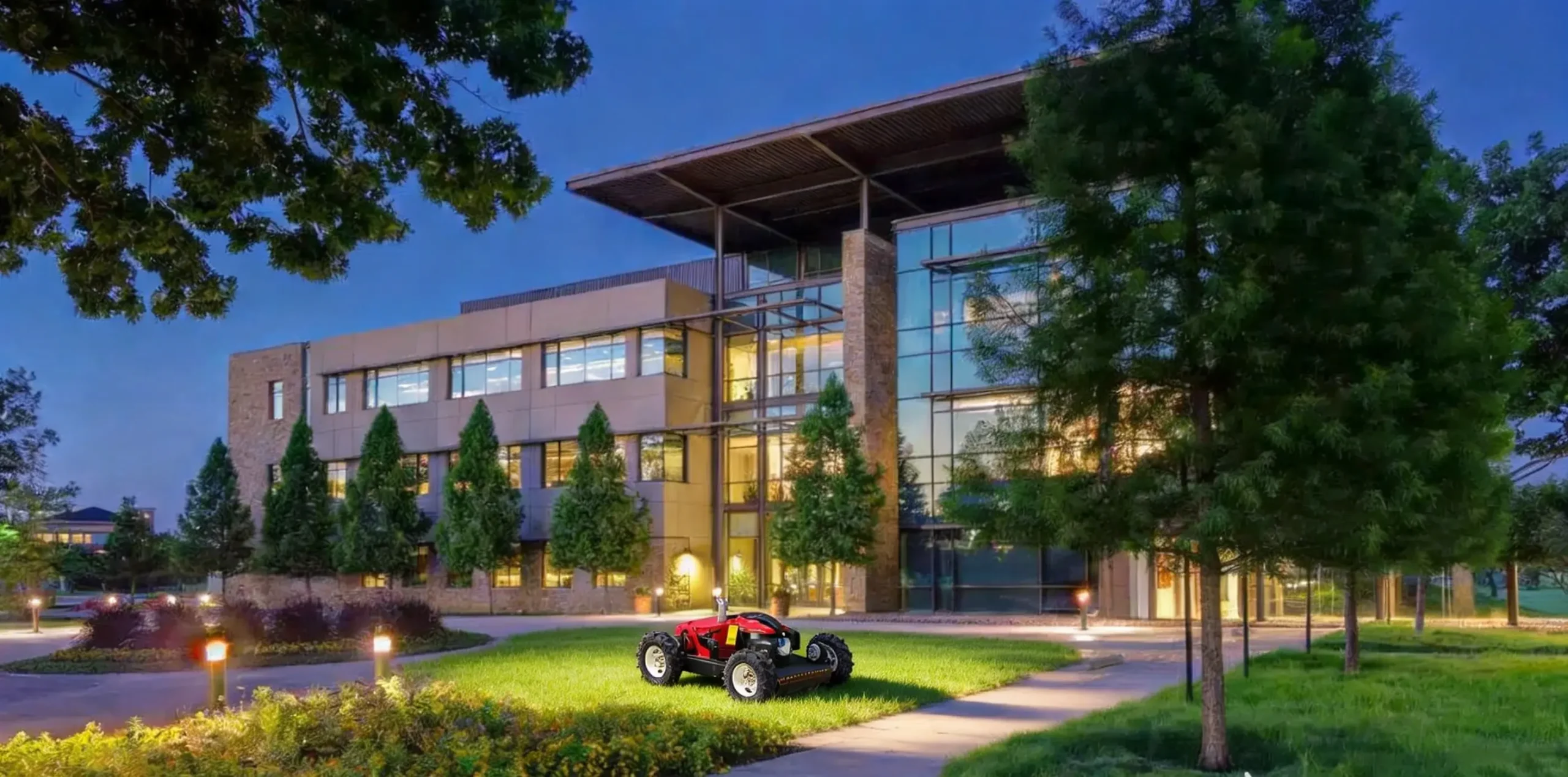
Best Suited Mower: Wheeled or Tracked Commercial Remote Control Mower
For commercial landscaping contractors and municipal service providers, labor shortages and tight job-site schedules are constant hurdles. Commercial remote control mowers act as a "force multiplier," letting a single operator complete work that once required a crew of 3 to 4 manual trimmers.
Key Environments:
◆Commercial office parks and industrial estates
◆HOA common areas and retention ponds
◆ Municipal parks and public green spaces
◆Property maintenance contracts with varied terrain
Why Remote Control Matters:
◆Labor Efficiency: Replaces multiple crew members using handheld string trimmers on retention pond banks or rough patches.
◆Productivity & Speed: Clears tough, overgrown acreage in a fraction of the time required by push mowers or handheld tools.
◆Reduced Fatigue: Eliminates vibration, heavy lifting, and physical strain on groundskeeping staff, leading to fewer workplace injuries.
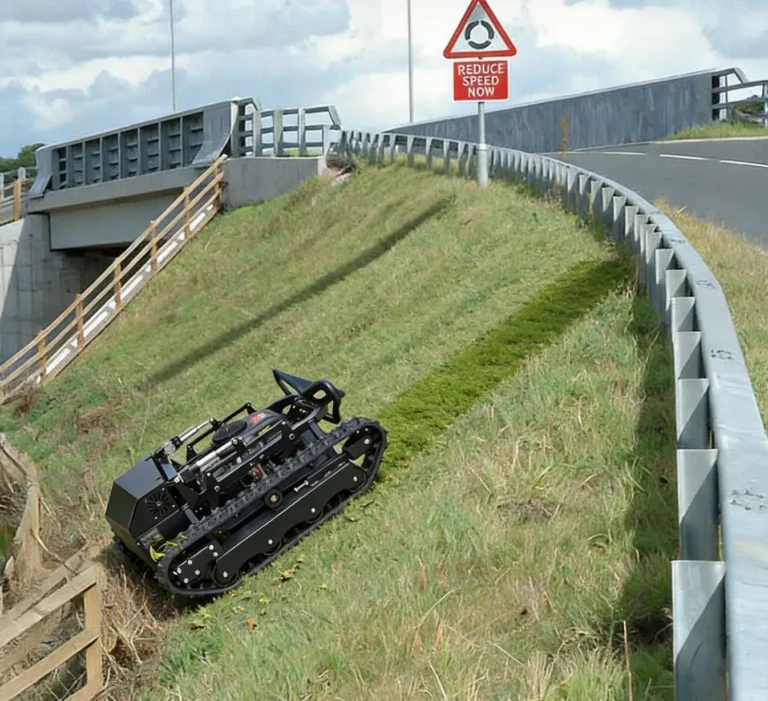
5. Remote Control Mowers for Highway Embankments & Roadside Slopes
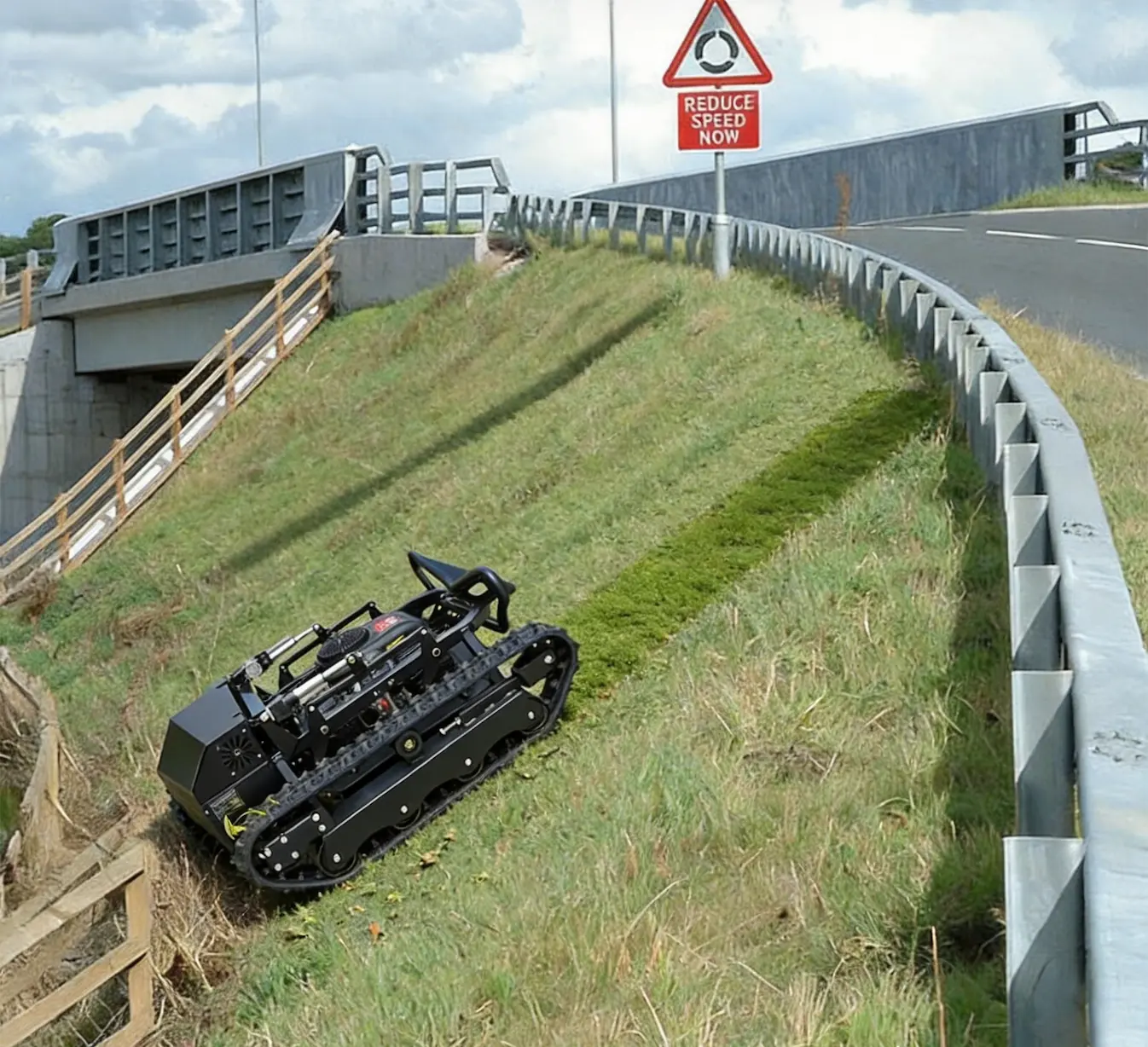
Best Suited Mower: Heavy-Duty Tracked Remote Control Slope Mower
Highway embankments can be difficult to maintain with conventional mowing equipment, particularly where slopes, uneven ground, roadside traffic, and limited operator access are involved. Roadside maintenance teams face constant exposure to passing traffic, flying road debris, and steep ditch slopes. Traditional tractor-drawn mowers often block lanes, requiring costly traffic control setups.
A remote control mower lets the operator control the machine from a safe position while maintaining visibility of the mowing area. Tracked configurations can provide additional traction on uneven or sloped ground, while the cutting width and mower configuration should match the vegetation and site conditions.
For highway maintenance contractors and roadside vegetation management teams, key factors include slope capability, traction, cutting width, remote-control range, transport dimensions, and access to spare parts.
Key Environments:
◆Interstate and highway embankments
◆Road shoulders and median strips
◆Railway rights-of-way and overpasses
◆Sound barrier perimeter corridors
Why Remote Control Matters:
◆Enhanced Highway Safety: Operators can stand behind guardrails or away from live traffic lanes while directing the machine.
◆Compact Footprint: Compact remote-controlled units often work without blocking active lanes of traffic, reducing the need for extensive lane closures.
◆All-Weather Capability: Tracked units handle muddy ditches, gravel shoulders, and overgrown brush with ease.
For a more detailed discussion of embankment mowing, roadside slopes, and highway maintenance, see our guide to the remote control mower for highway embankments.
Explore Remote Control Mowers for Highway Maintenance →
6. Parks, Resorts & Large Estates
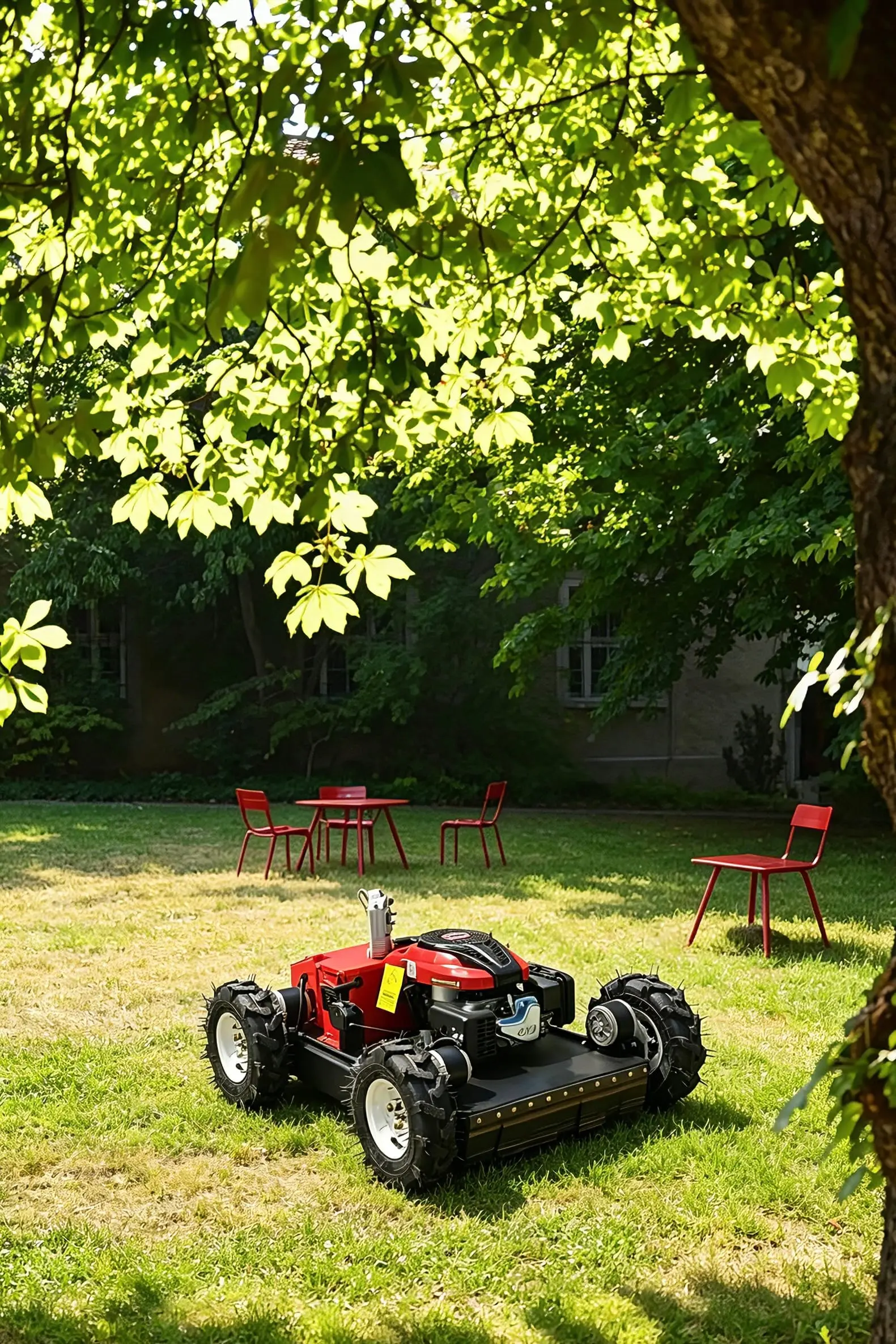
Best Suited Mower: Lithium-Battery or Hybrid Remote Control Mower (Wheeled or Tracked)
Large private estates, golf course roughs, eco-resorts, and public parks require a neat turf appearance alongside rough-terrain maintenance.
Key Environments:
◆Luxury resorts and golf course perimeters
◆Public nature reserves and trail edges
◆Large private residential estates
◆Cemetery grounds and historical sites
Why Remote Control Matters:
◆Zero Turf Tear: Rubber tracks and smooth hydrostatic drives minimize turf damage on manicured lawns during turns.
◆Quiet & Clean Operation Options: Electric/Lithium-powered models allow quiet operation around resort guests, residential areas, or noise-sensitive public zones.
◆Safety Near Water: Safely cut right to the water's edge on pond banks and streams without risking equipment sliding into the water.
7. Overgrown Grass, Brush & Rough Vegetation
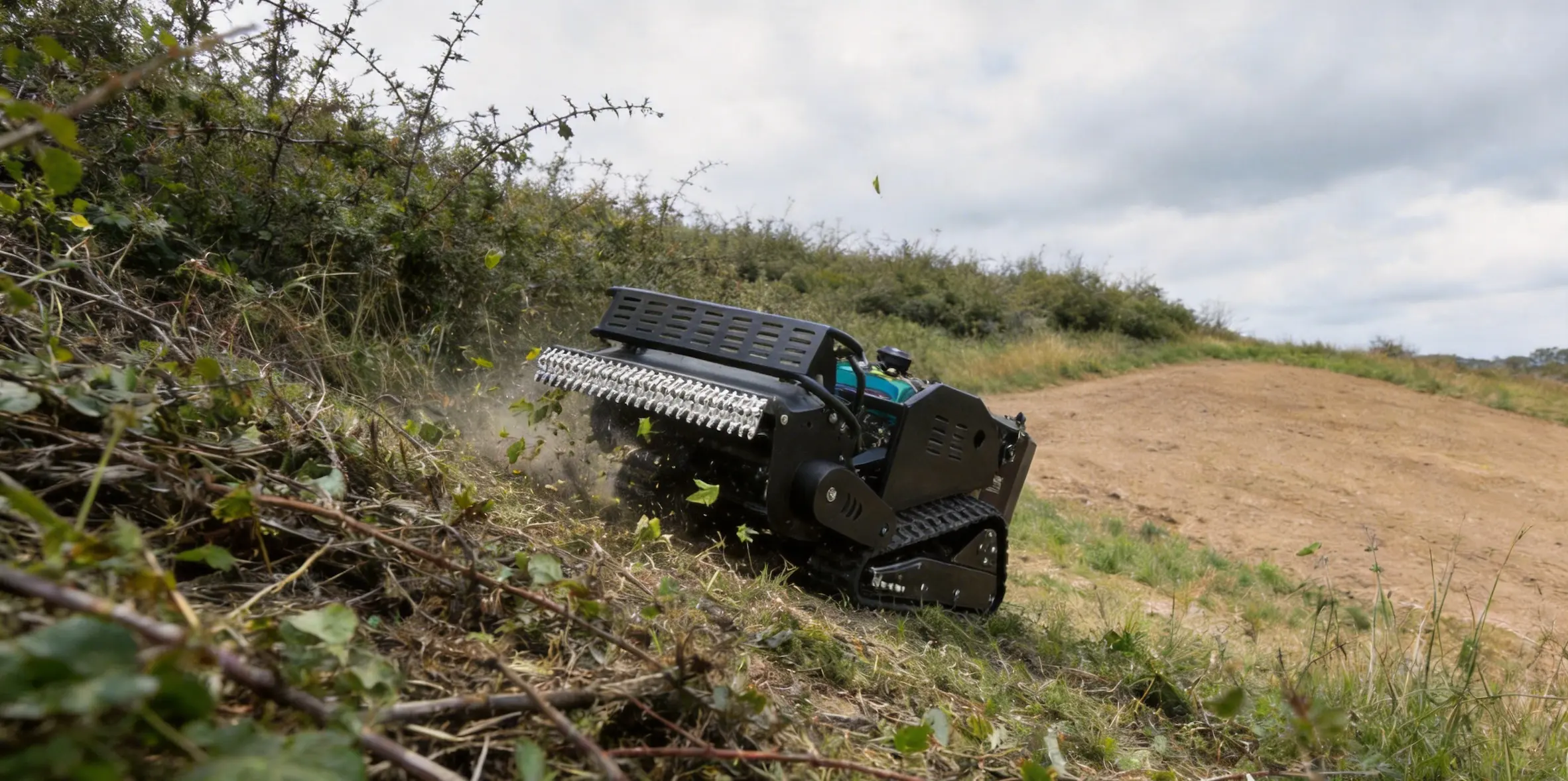
Best Suited Mower: Heavy-Duty Tracked Remote Control Brush Cutter
Many people mistakenly think remote control mowers are just larger versions of residential robotic lawn mowers. In reality, commercial remote control mowers are heavy-duty vegetation management machines built for thick brush, saplings, and unmaintained land.
Key Environments:
◆Abandoned or unmaintained plots
◆Construction site pre-clearing
◆Firebreak maintenance zones
◆Overgrown brushlands and dense weed patches
Why Remote Control Matters:
◆High Cutting Power: Equipped with high-horsepower gasoline engines (18HP+) and reinforced steel blades capable of shredding tall weeds, woody brush, and small saplings up to 1- 2 inches in diameter.
◆Obstacle Clearance: Easily crushes through hidden debris, anthills, and rough ground that would damage standard lawn mowers.
Quick Reference: Mower Selection by Application
To help commercial buyers match the right machinery to their operational needs, use the reference matrix below:
What Should Commercial Buyers Consider Before Purchasing?
If you are sourcing remote control mowers for fleet deployment, commercial contracting, or distribution, evaluating a few key technical parameters will ensure long-term ROI. Distributors and fleet buyers can explore our remote control lawn mower supplier and OEM/ODM solutions.
1. Max Incline Capability: Verify the machine's true operating angle. Look for low-center-of-gravity designs with heavy-duty engine oiling systems (to prevent engine starvation on steep inclines).
2. Undercarriage & Tracks: Tracked platforms excel on steep slopes and soft ground, while wheeled platforms offer faster travel speed on flatter, firm ground.
3 . Cutting Mechanism & Width: Choose flail blades for thick brush and heavy mulching, or rotary blades for fast grass cutting. Select a cutting width (e.g., 550mm to 1000mm) balanced between travel agility and coverage speed.
4. Engine vs. Battery Power: High-torque gasoline engines are ideal for continuous heavy brush clearing. Hybrid or Lithium battery models are best for lower noise, reduced emissions, and low-maintenance needs.
5. Operating Range & Signal Stability: Industrial 2.4GHz remote control systems should offer clear signal control up to 400 meters with emergency auto-stop features.
6. B2B & Fleet Support: When purchasing multiple units for commercial use, consider spare parts availability, factory warranty, OEM/ODM customization options, and direct technical support.
Commercial Remote Control Mower Solutions from Trimmora
At Trimmora, we design and manufacture commercial-grade remote control mowers engineered for extreme slopes, dense brush, and demanding commercial environments.
Whether you are a municipal contractor looking to increase job-site safety, a solar farm maintenance team reducing operational costs, or an equipment dealer expanding your commercial catalog, we supply factory-direct solutions built for performance.
◆Heavy-Duty Tracked Slope Mowers (Handling slopes up to 60°)
◆High-Torque Gasoline & Hybrid Brush Cutters
◆Quiet Lithium Battery Commercial Models
◆Factory-Direct Wholesale, Spare Parts & OEM/ODM Services
Need the Right Machine for Your Terrain?
Trimmora supplies gasoline- and lithium battery-powered wheeled and tracked remote control lawn mowers for landscaping, steep slopes, orchards, vegetation management, and other commercial applications.
Explore our commercial remote control lawn mower range or [Contact the Trimmora Team Today] for a tailored model recommendation and a factory-direct quotation.
[…] orchards, solar farms, roadside vegetation management and large properties. Explore our guide to commercial remote control mower applications to see how different mower configurations can match different terrain and maintenance […]
[…] To learn more about commercial applications, please visit 7 Commercial Applications of Remote Control Lawn Mowers. […]
[…] farms, highway embankments, orchards, municipal grounds, and other commercial sites.Explore our [Commercial Applications of Remote Control Mowers] to see how different working environments affect machine […]